10 Types of Historical Sword Patterns You Should Know
10 Types of Historical Sword Patterns You Should Know
Across history, sword patterns have evolved to fill different roles for ceremonial and combative roles. Some swords are designed for military dress, others to represent symbolic ideals, others for dueling, and some to be more effective in battle. This short post will break down the details associated with 10 relatively commonly encountered types of historical swords, from crusader swords to seax swords and several in between.
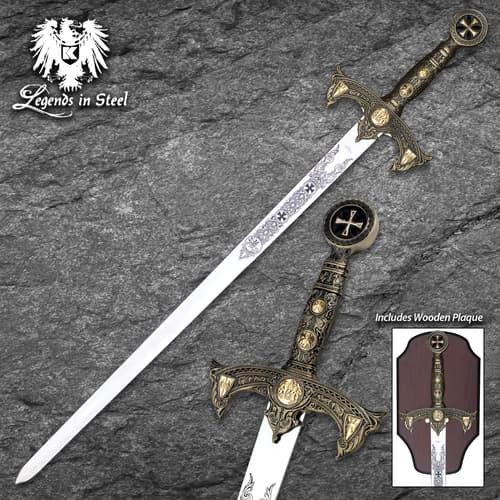
Crusader Swords
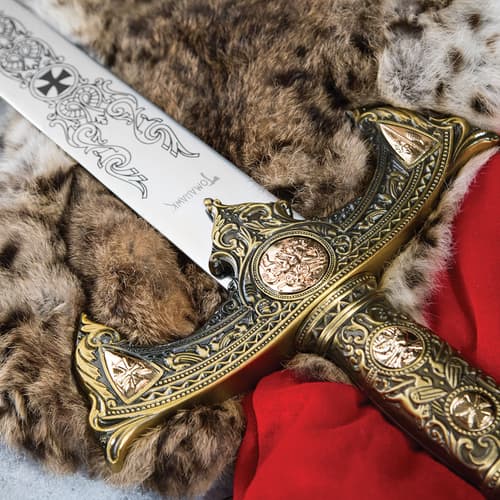
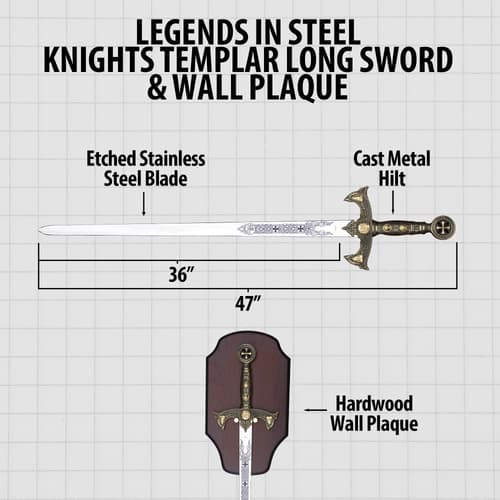
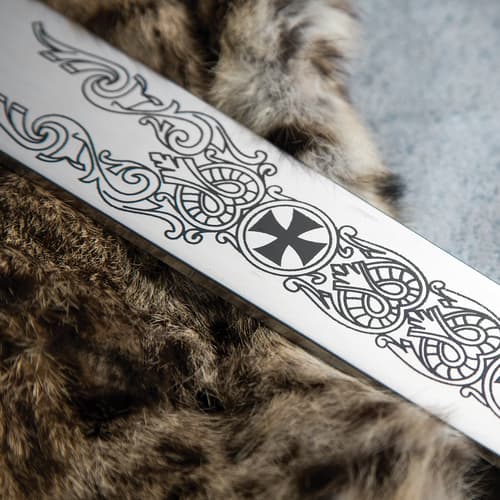
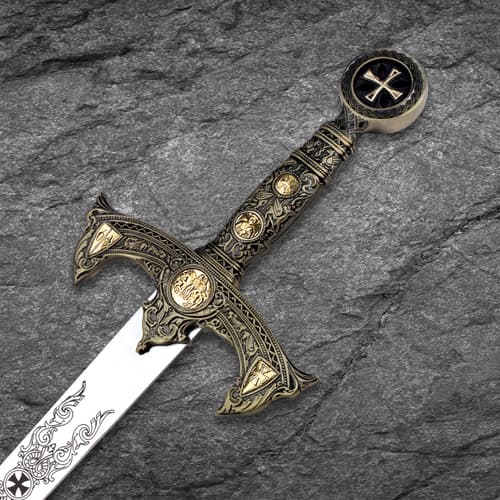
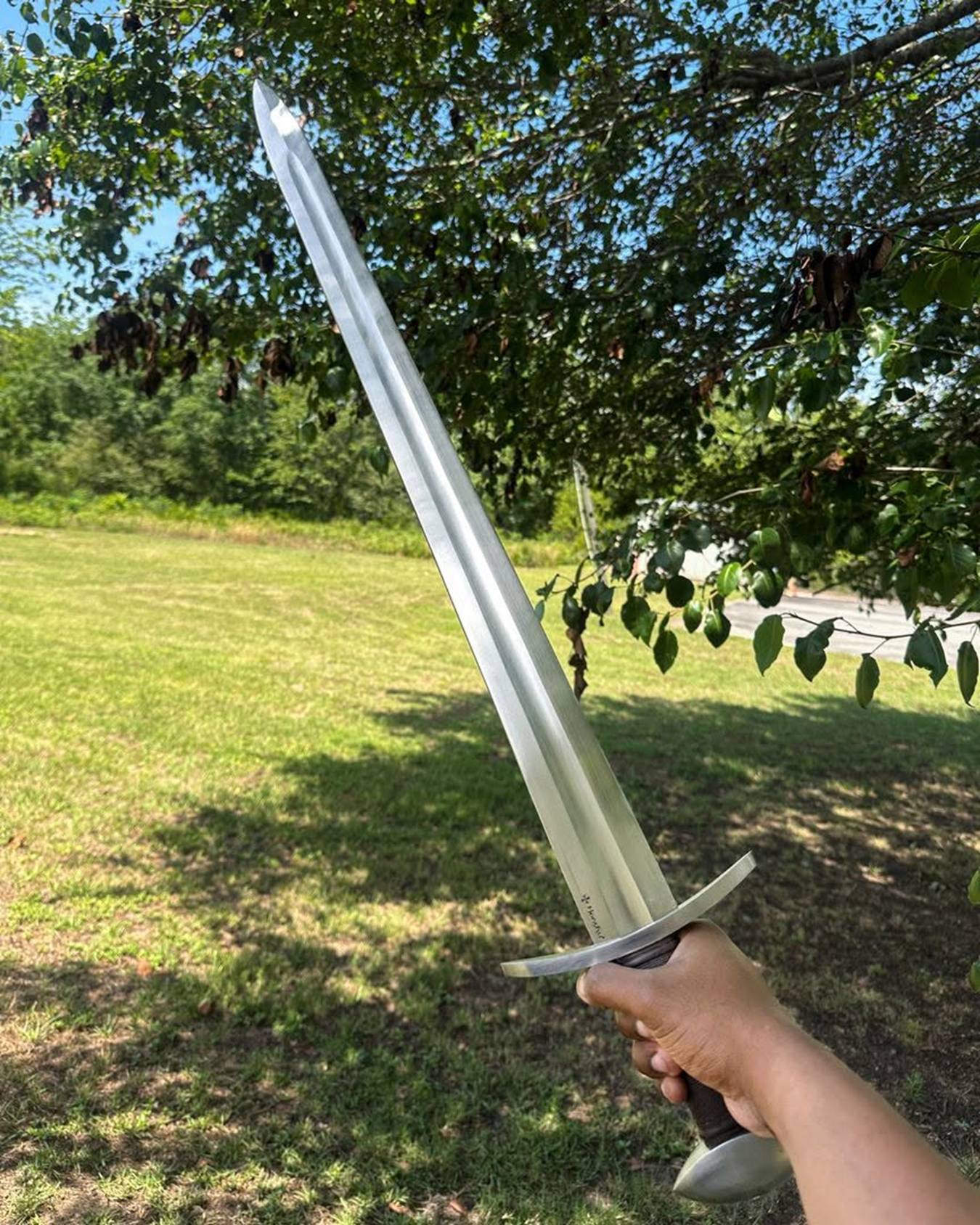
There is no single pattern that could be definitively called a Crusader sword, however, many patterns that were carried during the Holy Wars between the 11th and 13th centuries were typified by their cruciform patterns and double-edged blades. Size could vary, with some being intended to be wielded with one hand and others with two. In the middle there were “arming swords” and “hand-and-a-half” swords that could be wielded with one or two hands. However, the cruciform, or “cross-shaped” pattern and double edged blade are the most typical of a crusader sword.
Cutlasses
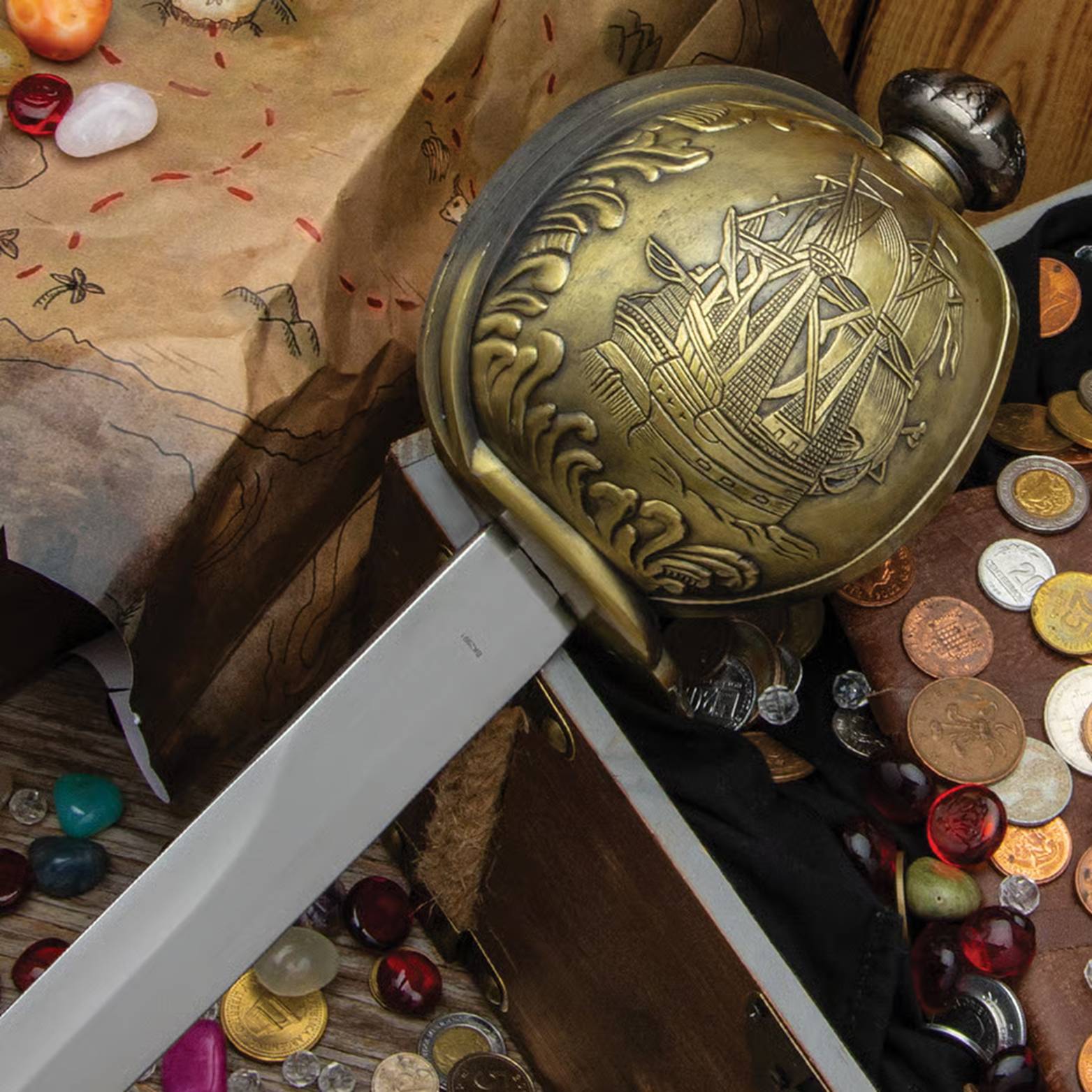
A cutlass is a short, single edged sword that was intended to serve in the hands of seamen on board vessels during naval engagements. Its small size made it more effective in the cramped confines of a vessel. Also, most cutlasses were made with brass hilts and hardware that was more corrosion-resistant for use in marine environments, and on top of that, many were made with basket hilts that protected a wielder’s hands.
Claymores
The claymore, from the Gaidhlig word, “claidheamh mor” for “great sword” is a pattern associated with Scotland. It is a large sword pattern with a double-edged blade, with a hilt that typically had forward sloping quillions. Sometimes the quillions were tipped with quatrefoils, another typical feature of the pattern.
Seax Swords (AKA SAX)
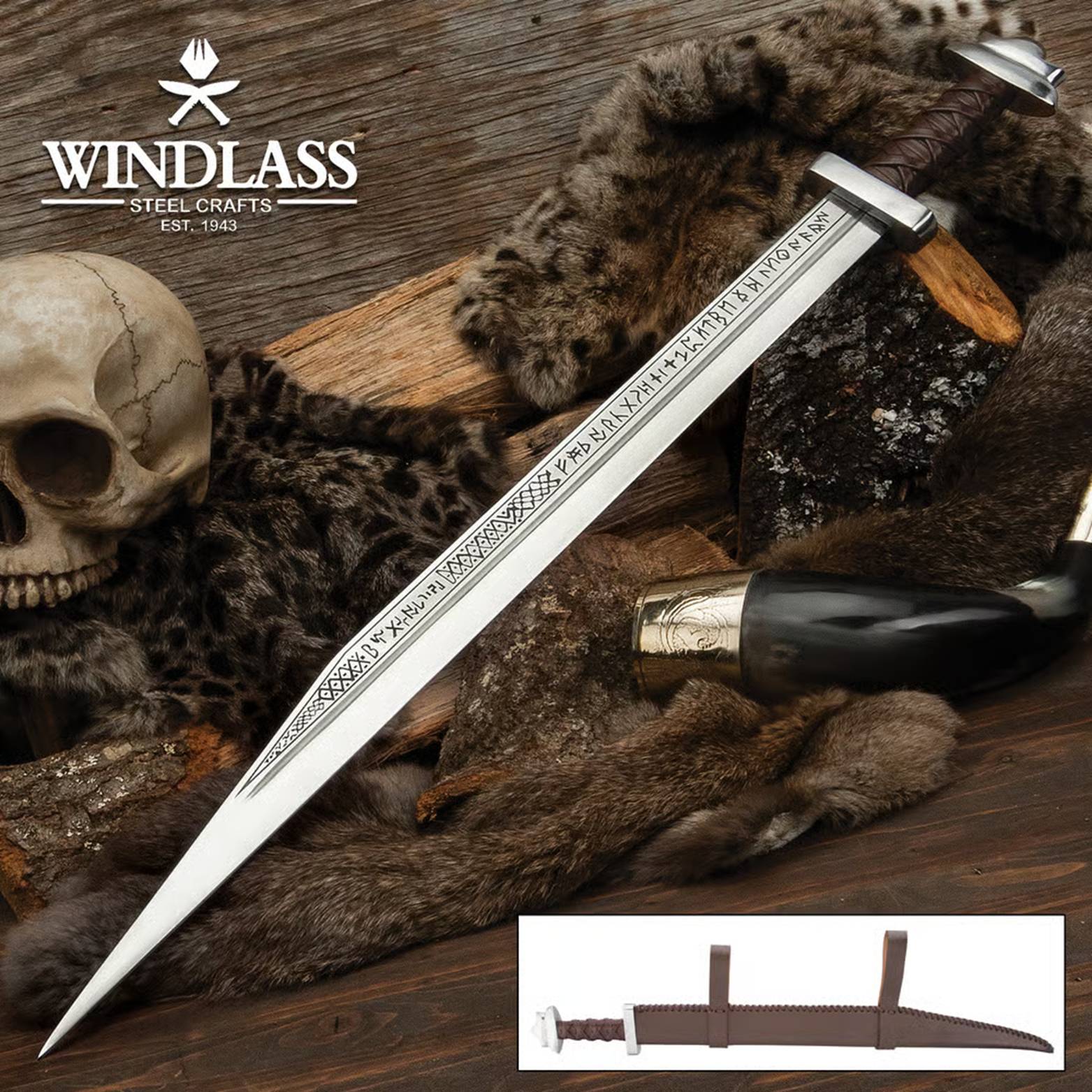
A seax sword, also known as a sax, is perhaps a large knife, rather than a sword. The main calling card of a seax sword would be that it had a wharncliffe or sheepsfoot pattern blade with a spine that sloped down to meet the edge. While a seax sword could be wielded as a weapon due to its larger blade, it also likely served its wielders in a role of general utility more often than not.
Viking Swords
Viking swords, also known as Norse swords or Carolingian swords, were common in Northern Europe during the Viking Age. These swords could be identified by their double edged blades as well as by their more compact hilts that were designed to accommodate only a single hand. The hilt of a Viking sword would typically be wrapped in leather and ornately decorated, sometimes with engravings or filigree. A Viking sword would also have slightly forward-curved quillions and a pommel either of a lozenge or nut shape, or else a lobed pommel with three or five lobes.
Katanas
A katana is a traditional Japanese sword pattern and one that is well-recognized in the popular imagination. The katana has a slightly curved blade that has a differential temper and a single edge. Using a clay tempering process, a katana is given a temper that hardens the edge but keeps the spine a little softer to be better able to absorb shock. The katana is also recognizable by its rayskin wrapped handle and lacquered wooden sheath.
Rapiers
A rapier is a long, thin sword with a double edge and a swept hilt that is designed to protect the wielder’s hands. Though the blade is double edged, it is thin and slight, and not well-adapted for slashing attacks. Rather, a rapier is specialized for making thrusting attacks.
Gladius Swords
A gladius is a short sword associated with Ancient Rome. The short, stiff blade was well suited not just to thrusting but to slashing maneuvers. The short blade, typically between 16 and 24 inches, was specialized for combat in close quarters, especially in formation.
Falchion
A falchion is a historical European sword pattern that typically has a larger blade and can be wielded with one or two hands. Like many other European sword patterns, falchions generally have straight crossguards, but the main feature is that they have a single edge.
Falcata
A falcata is a sword pattern that has a leaf-shaped blade and a single edge. It also sported a hilt with a D-guard, or one that only partially enclosed the wielder’s hand. While a falcata could be used to deliver effective thrusting attacks, the heavy, weight-forward blade was far better suited to making strong slashing attacks. Its heavy blade could even be effective at cleaving armor.
Explore Many of These and Other Historical Sword Patterns Here
This short post only covers 10 of the common historical sword patterns you’re liable to encounter in a collection like this. For more information, check out our previous post, Common Battle Ready Sword Patterns and Profiles, or get in touch with us and we will be happy to assist.