13 Unique Types of Medieval Swords and Weapons
13 Unique Types of Medieval Swords and Weapons
Medieval weapon patterns still hold the curiosity of the public eye, and the ingenuity and creativity of so many of these designs is still intriguing to us today, well more than a thousand years after they first evolved. Therefore, let this short guide serve as some preliminary insight into the world of medieval swords and weapons.
Swords
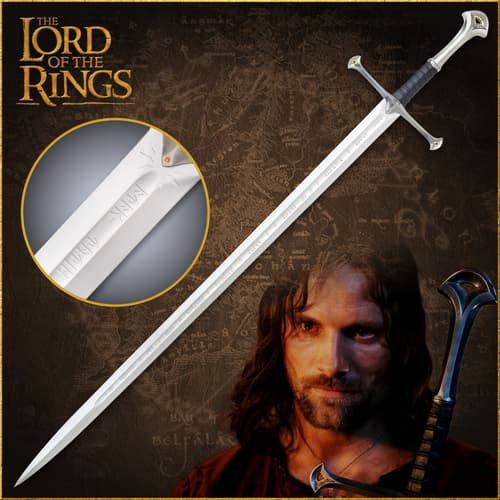
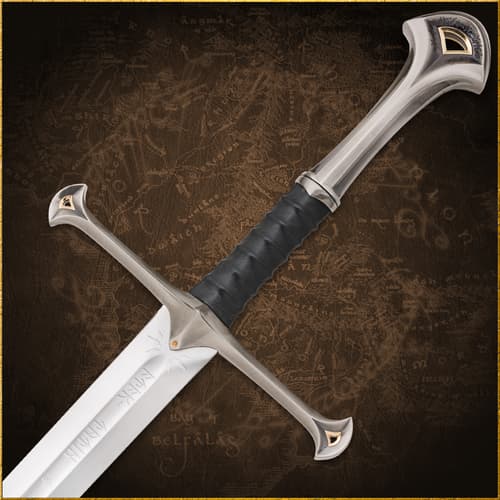
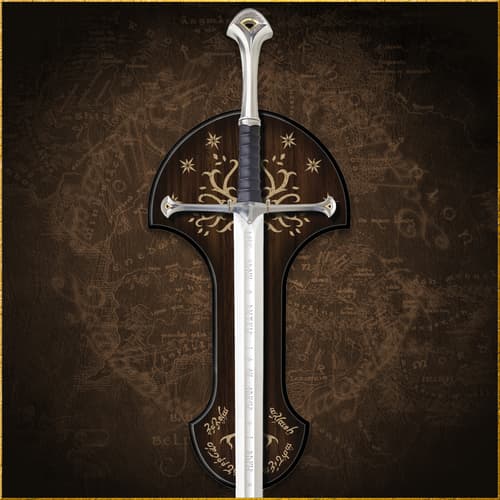
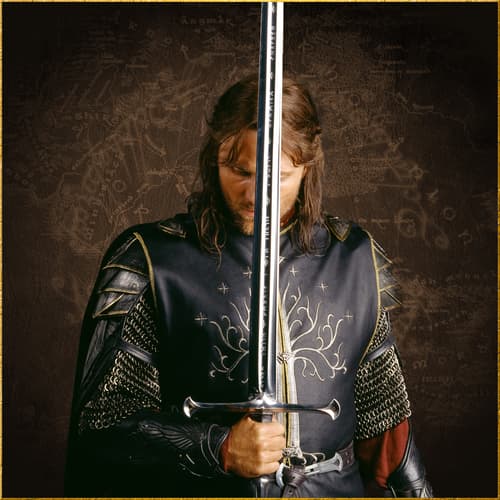
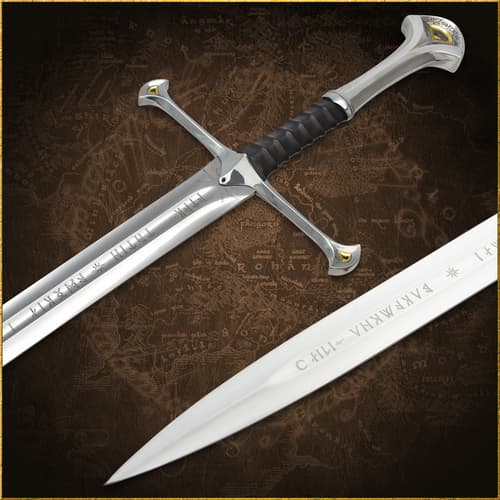
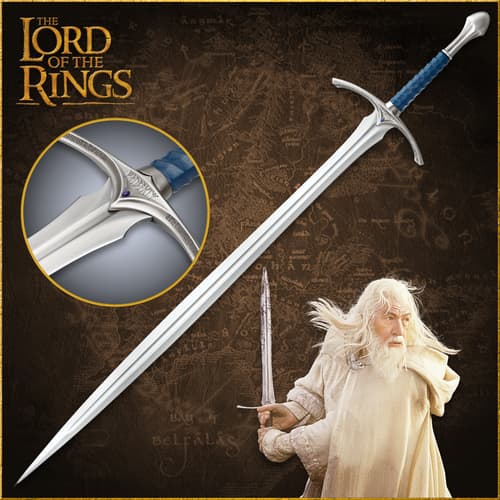
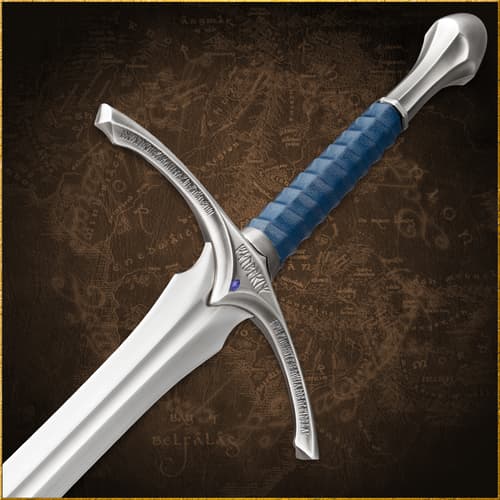
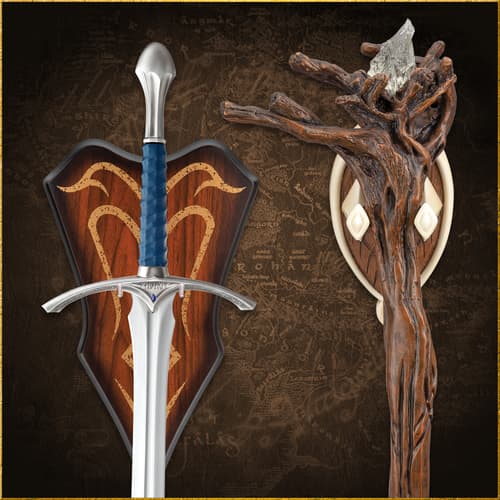
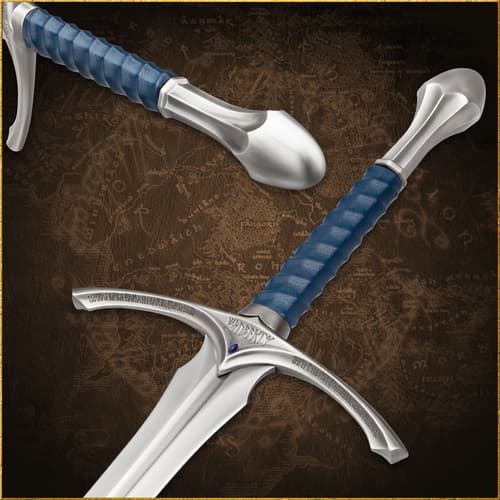
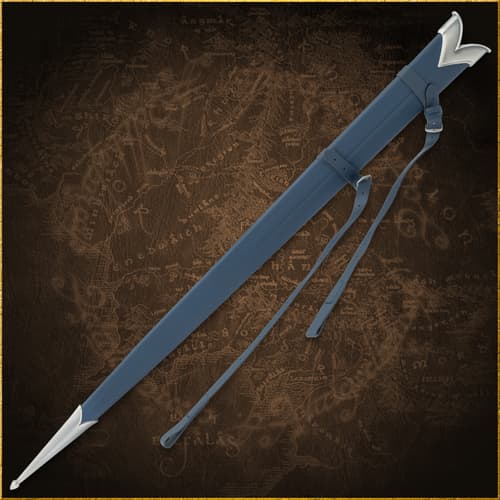
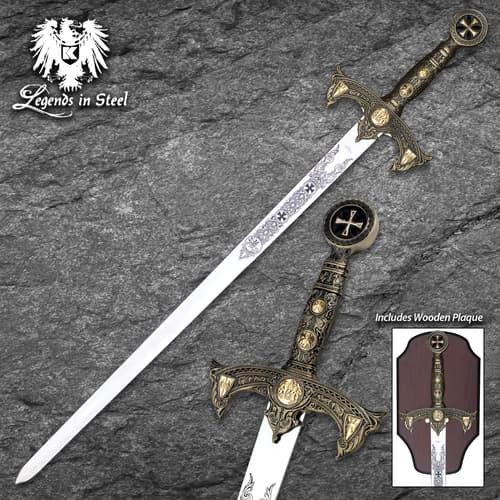
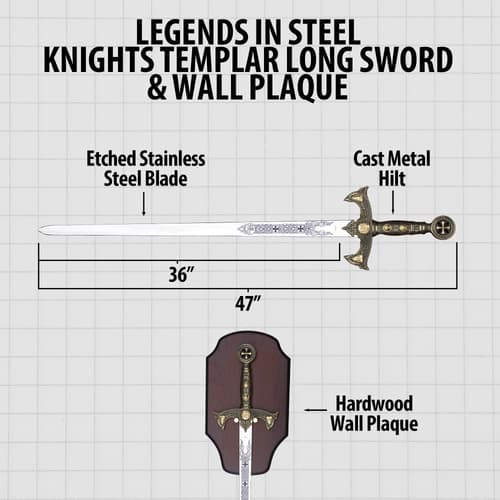
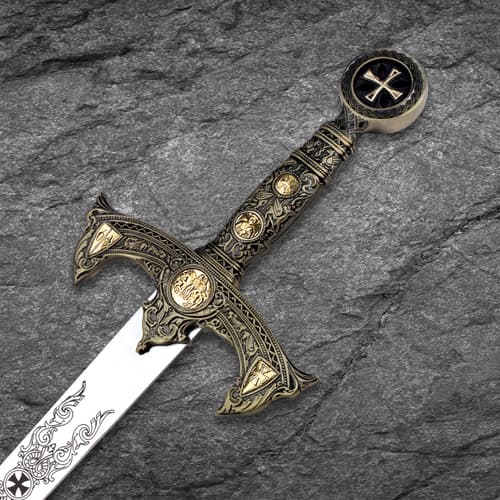
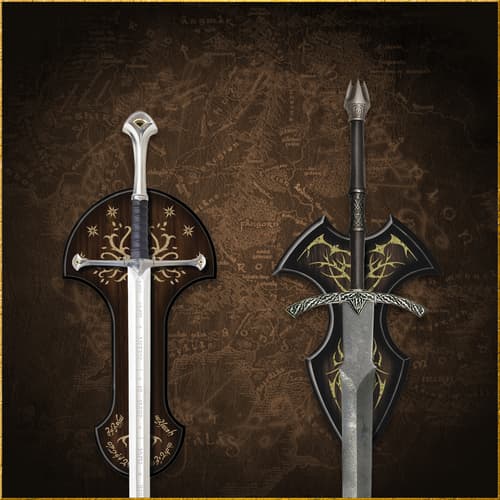
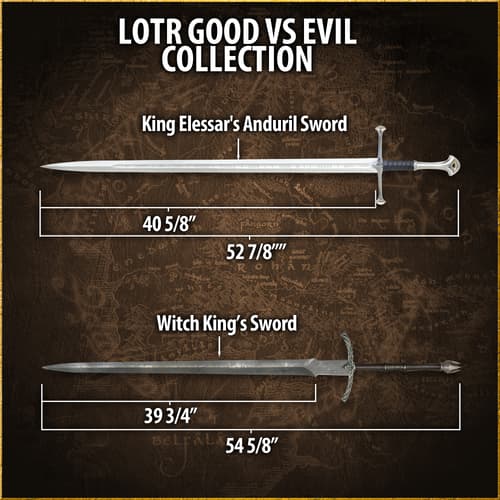
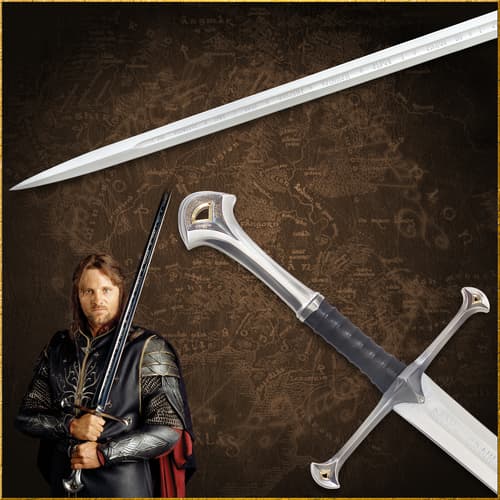
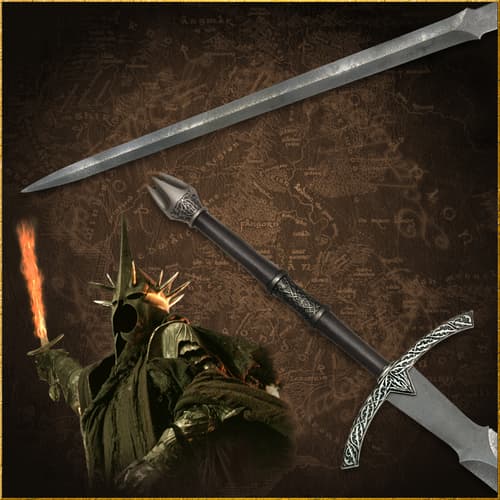
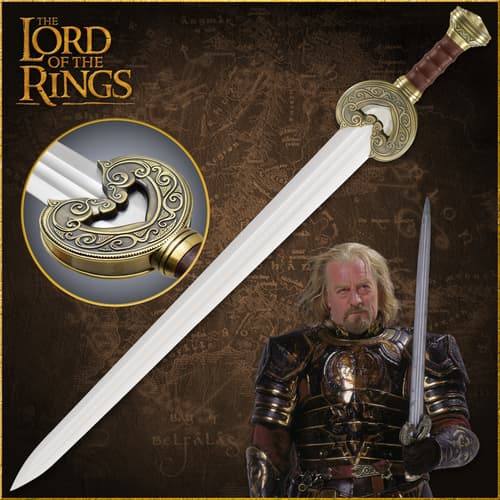
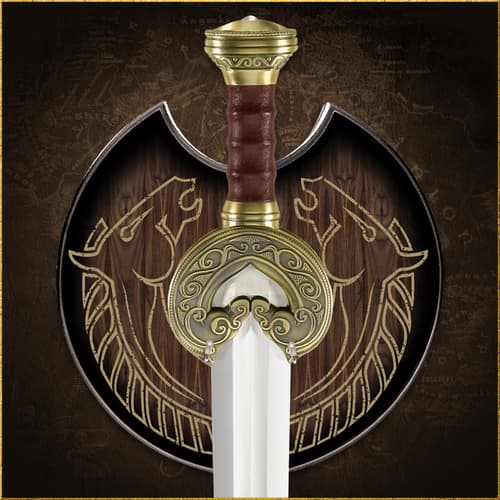
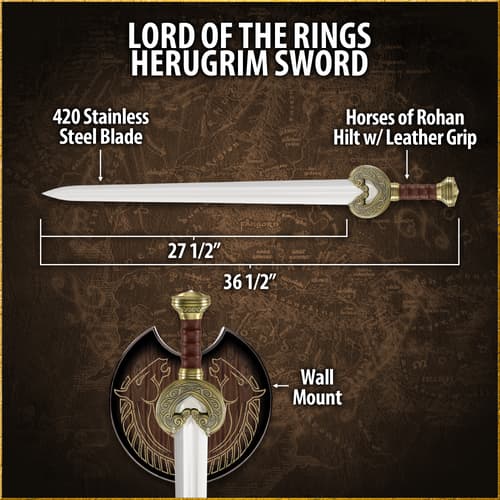
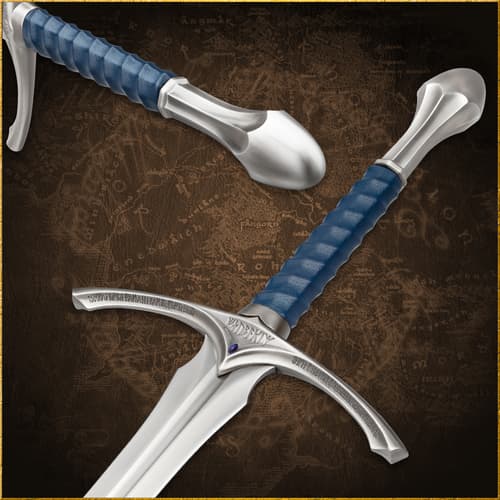
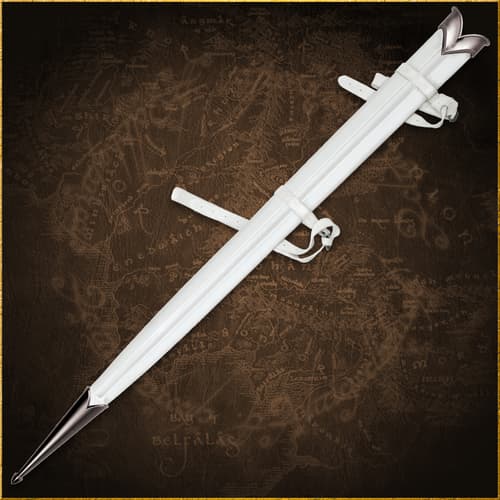
Previously, we published a post covering many of the more popular sword patterns out there, and many of the ones covered, including broadswords, arming swords, great swords, and falchions, are medieval patterns. See that post for more information.
Battle-Axe
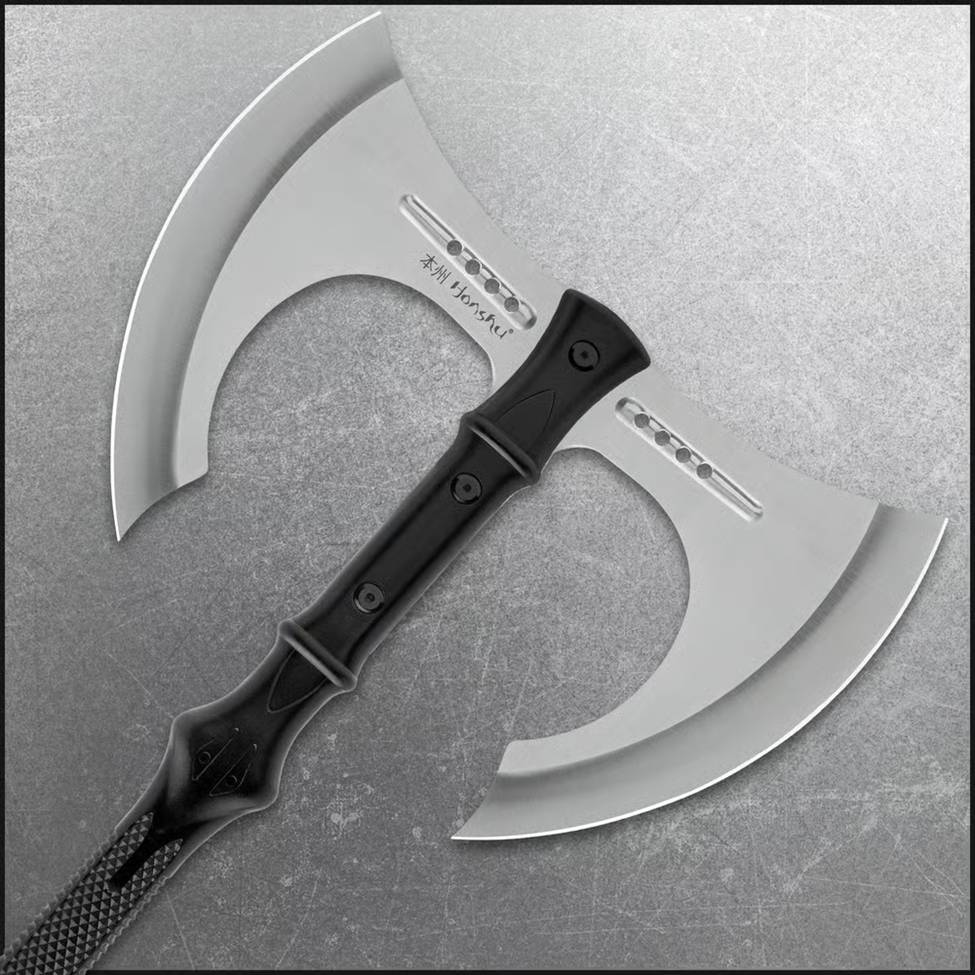
Broadly speaking, a battle axe is any axe intended as a weapon, but the common image of a battle axe is of an axe with a double bit that would be more effective as a short-hafted melee weapon. Unlike swords, which had relatively fragile blades, an axe could be used with much greater abandon in a battle without fear of damaging it.
Bearded Axe
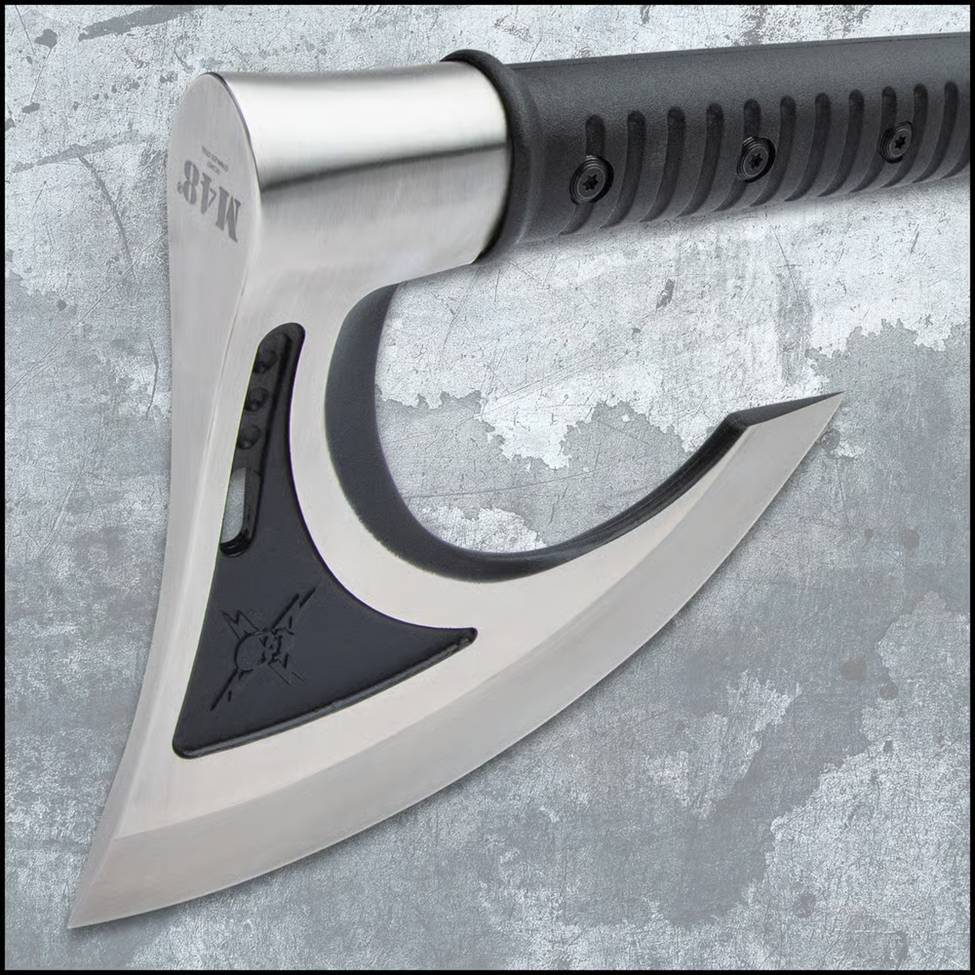
A bearded axe is an axe with a bit that extends down along the shaft, under which the user can choke up his or her grip. This configuration creates a longer, broader cutting edge (bit) and also allows the user to exhibit greater control over the weapon.
Mace
A mace is one of any type of melee weapons with a heavy head that is used for striking or crushing an opponent. Often the head is flanged or spiked, though this need not necessarily be the case. Unlike swords or polearms, a mace was not a fragile weapon and was highly effective against armored opponents, even those wearing plate armor, as the brute force of a mace could cause grievous injuries even in spite of armored protection.
Flail
A flail is basically an articulated mace. Typically, a flail consists of a ball and a chain, and the flail could be swung with greater force due to the mechanical advantage of the joint. As a result, a flail like a mace could be used to great effect, even on an adversary that was heavily armored.
Morningstar
A morningstar is a special type of mace that usually has a ball head with spikes protruding from it. Because of the unique configuration of a morningstar, it could be used to deliver not only crushing blows but to pair these with the trauma inflicted through puncture wounds. A morningstar also would have been easier to produce than a flanged mace, which would have required a master blacksmith.
Warhammer
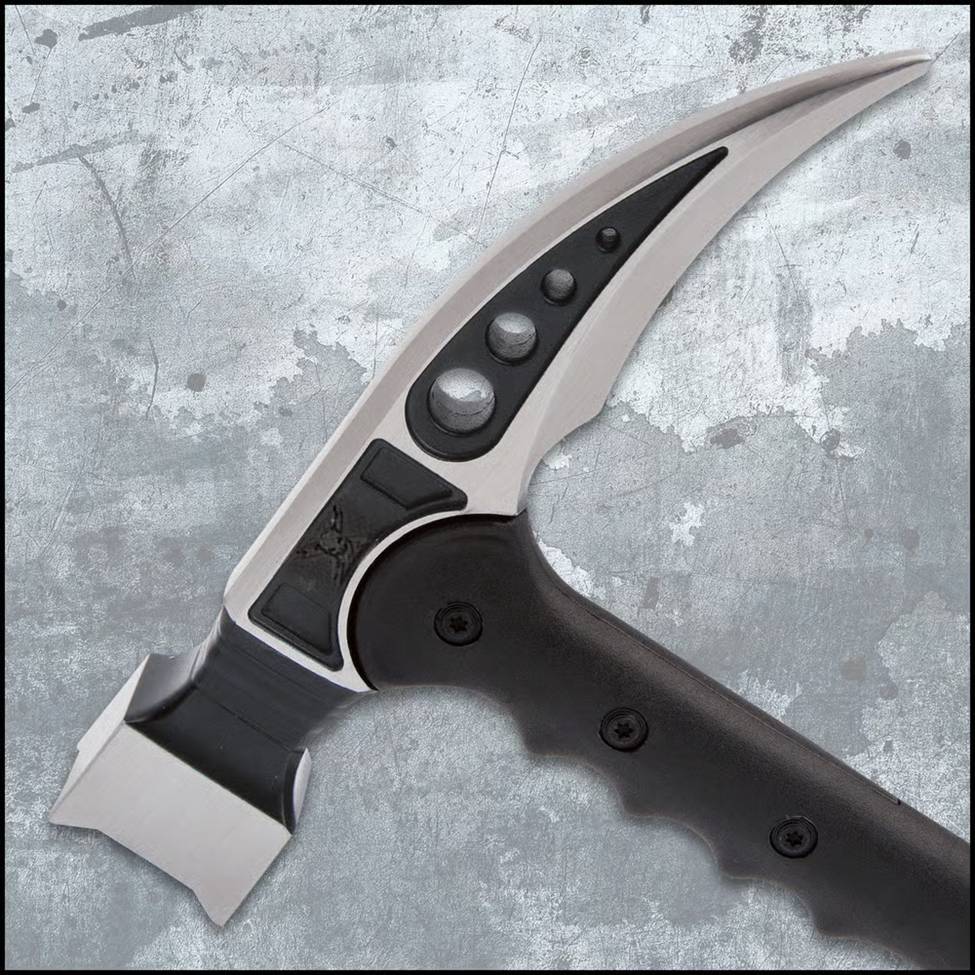
A warhammer is a type of weapon typically consisting of a long wooden haft with a pronged or flattened hammer head set at the top. Occasionally the construction would be all-steel without a separate wooden haft. Sometimes the hammer would be double-headed, other times the poll of the hammer would be spiked to increase the versatility of the weapon; one side of the head could effectively be used to deliver crushing blows and the other to inflict puncture wounds.
Polearm
A polearm is any type of weapon consisting of a head that is set on a length wooden pole or shaft, hence the name. Some of the more common polearm patterns will be covered below.
Lance
Lance is a generic term for a type of polearm that generally was set with a spear head. Spear heads could either be designed for throwing or thrusting. In the latter case, the base of the head would typically be flanged so as to prevent the spear from penetrating too deeply, making it easier for the wielder to retrieve it.
Pike
A pike is a type of spear that is typically used for thrusting or arranged in a defensive formation to be used more or less statically. The length of a pike’s shaft would be quite long, longer in most cases than other spears, and between 10 and 20 feet.
Halberd
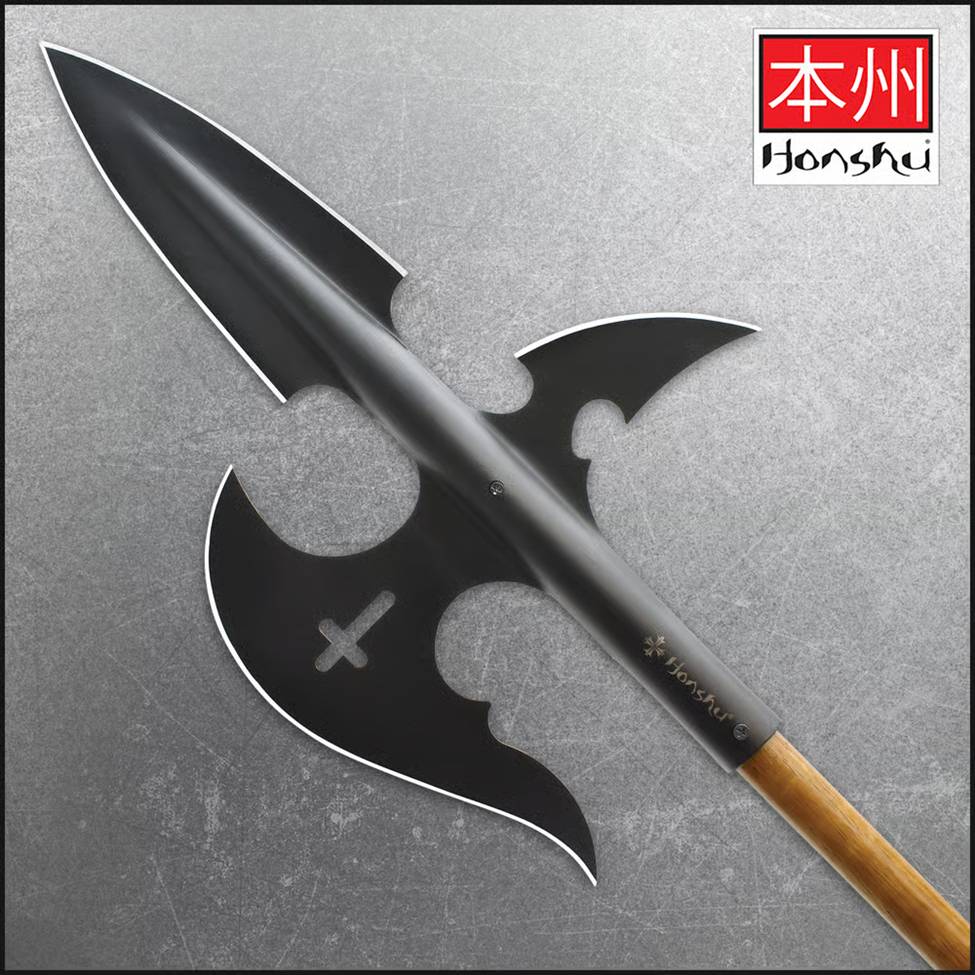
Also spelled halbard or halbert, a halberd is a polearm intended to be used with two hands; often the head of the halberd would incorporate many utilitarian features, such as an axe, a thrusting point, a hammer, or a hook to be used to disarm an opponent.
Glaive
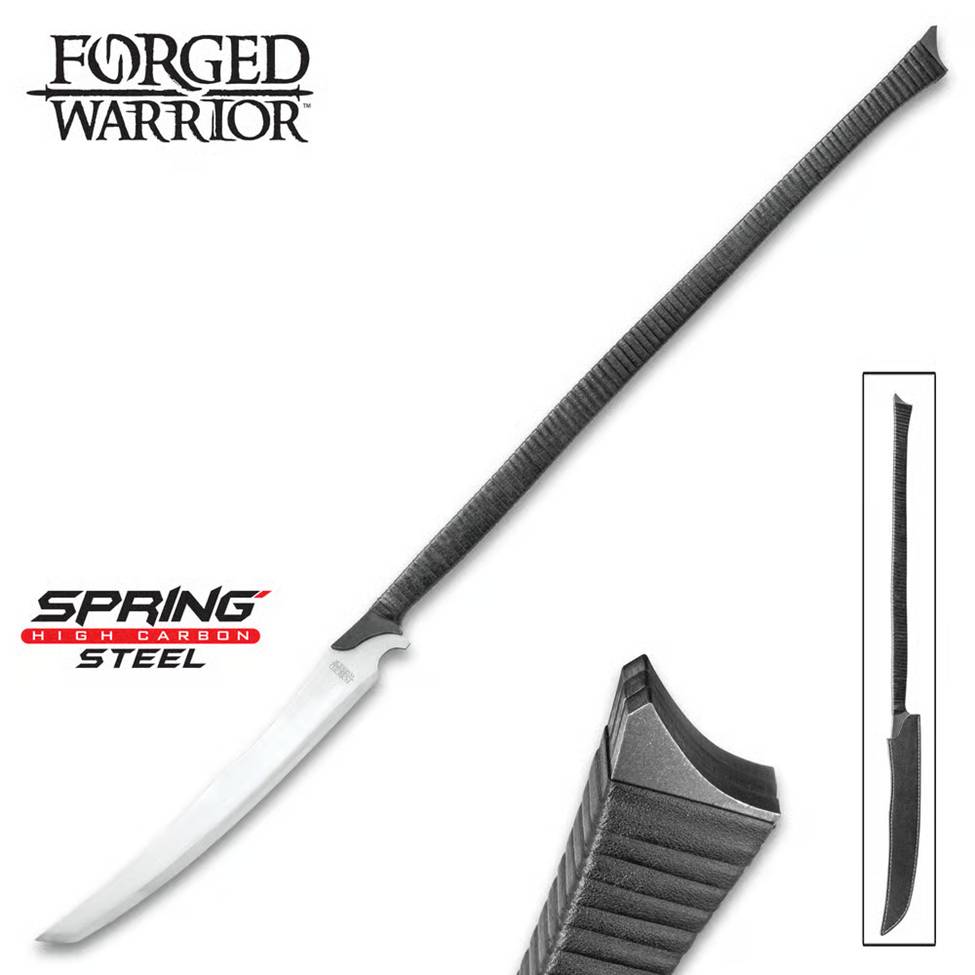
A glaive is a specific type of polearm that typically consists of a knife or sword-like blade on the end of a shaft that is used for thrusting and slashing. If it looks like a sword or knife on a stick, it’s probably a glaive.
Billhook
A billhook is very like a glaive, except that in a billhook the bladed head of the weapon is necessarily inwardly curved, like a hood, hence the name. Because of this feature the billhook could be used for slashing, pull-cuts, and grappling with an enemy.
Discover More Medieval Swords and Weapons Here
If you’re interested in learning more about the different medieval swords and weapons out there, take a look through our collection as a starting point. We carry a wide range of different swords, axes and polearms and many of them are battle ready.