Sword and Swordplay Terminology
Sword and Swordplay Terminology
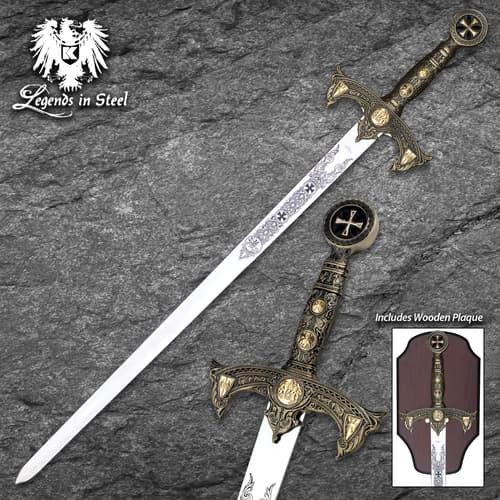
An entire book could be filled with a list of terms that describe the parts of a sword, or which are used in traditional swordplay. Indeed, many have. The task before this short post is nowhere near as ambitious, but should serve as a solid introduction, off of which you can build as you learn about both Western and Eastern swords, and their traditional, associated martial arts.
Parts of a Sword
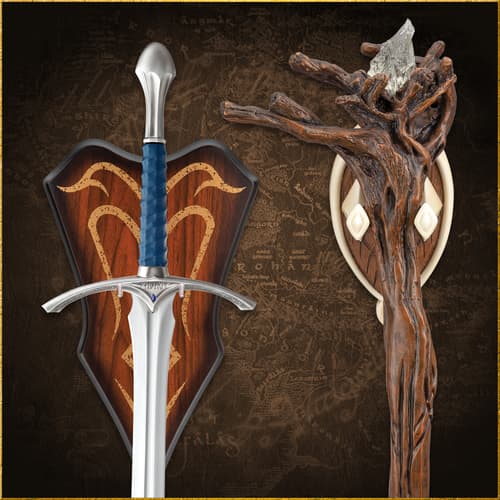
First, let’s start with the parts of a sword. Many of the terms covered here are used broadly and applicable not just to a wide class of swords, but to other weapons as well.
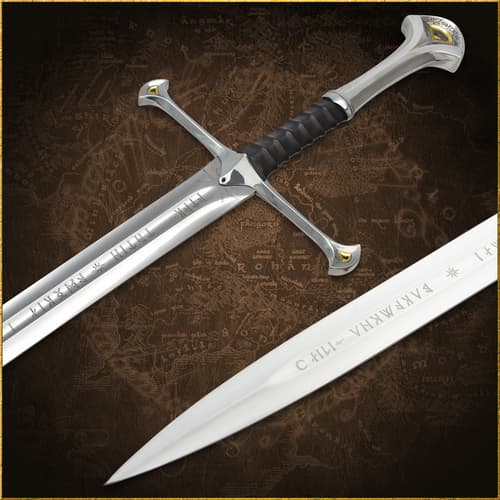
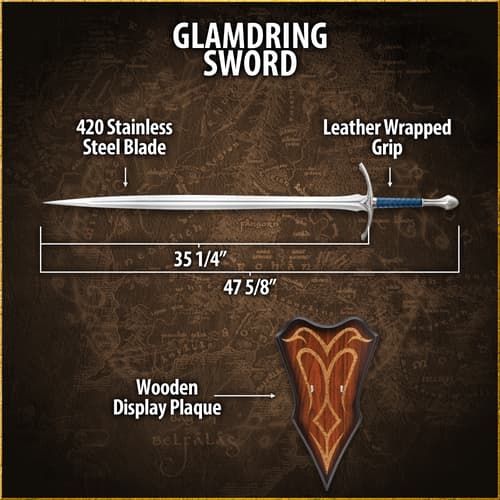
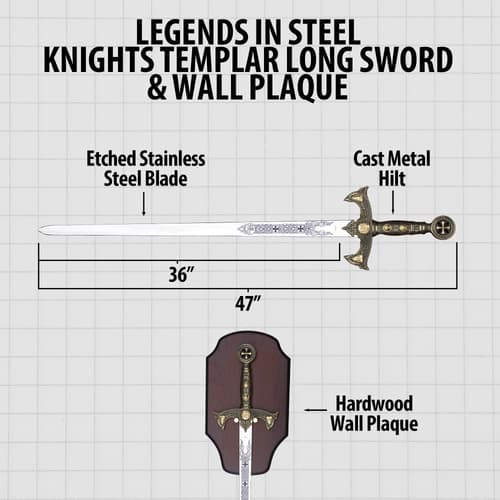
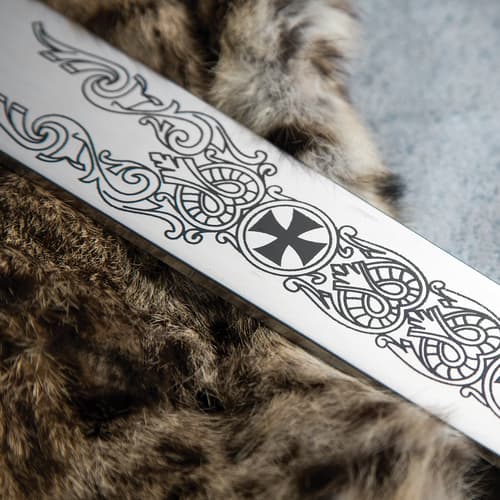
- Blade: The metal portion of a sword that extends beyond the hilt, which is sharpened on either one or both edges.
- Tang: The portion of the blade that extends through the hilt of the sword. To be a true battle-ready sword, a sword must have a full tang that is at least one third the width of the blade.
- Fuller: Also known as a blood groove, a fuller is a section of the blade where metal has been removed either to lighten or stiffen the blade, or both.
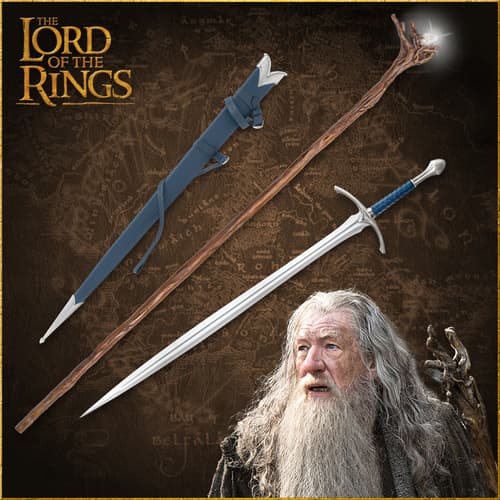
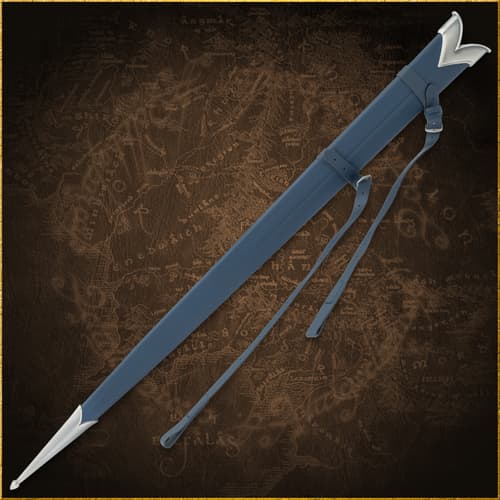
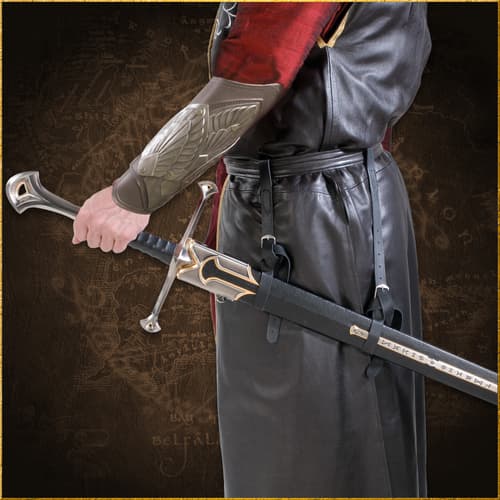
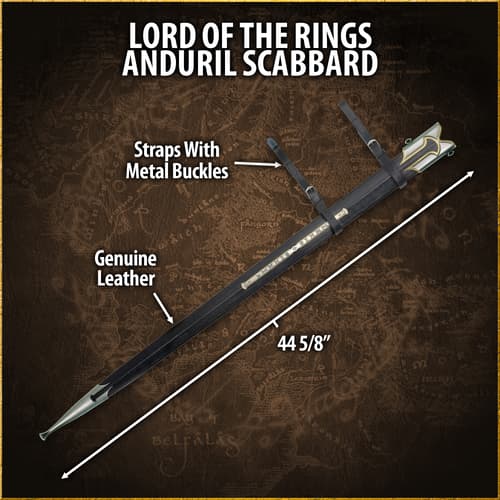
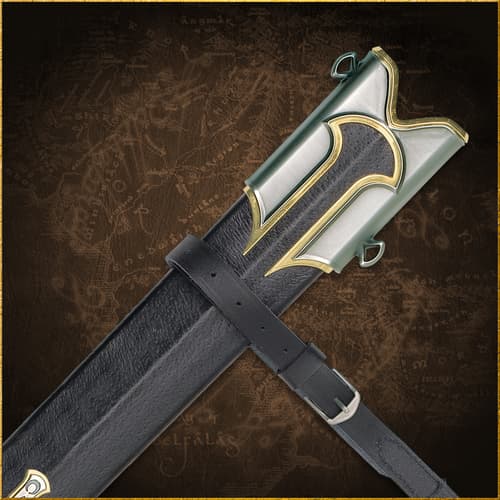
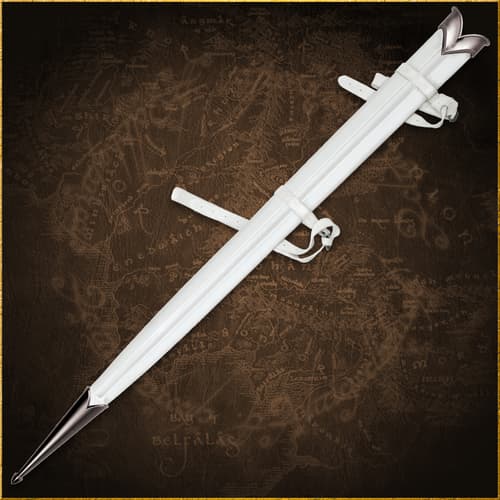
- Scabbard: A covering for the blade, in which the sword is carried.
- Frog: A loop, often of leather or metal, which serves as an attachment point for the sword’s scabbard. It is often worn on a belt.
- True edge: The sharpened edge of a blade, the leading edge, that is primarily used for offensive maneuvers.
- False edge: The “back” edge; it may be sharpened or not, and is not the one primarily used for offensive attacks, though there are some maneuvers that utilize it.
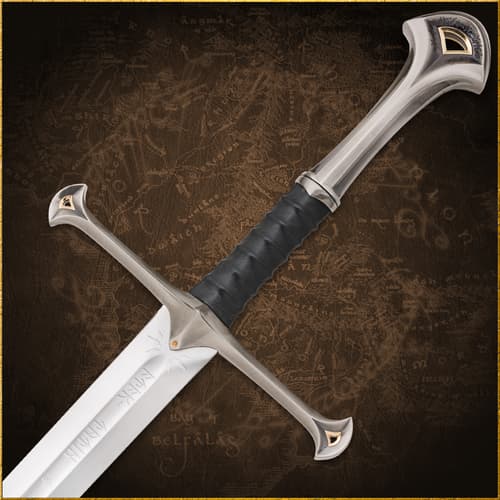
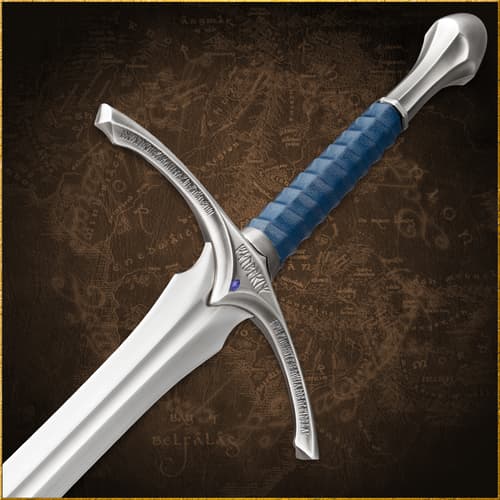
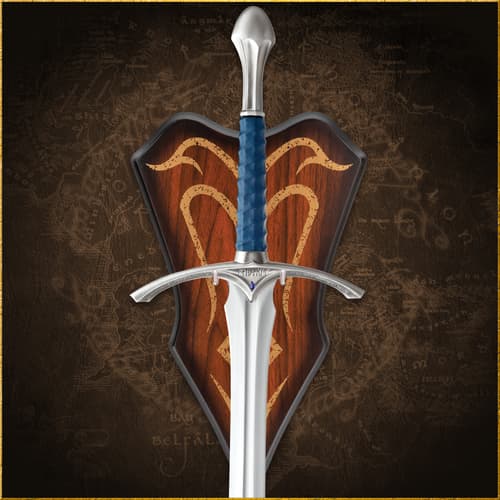
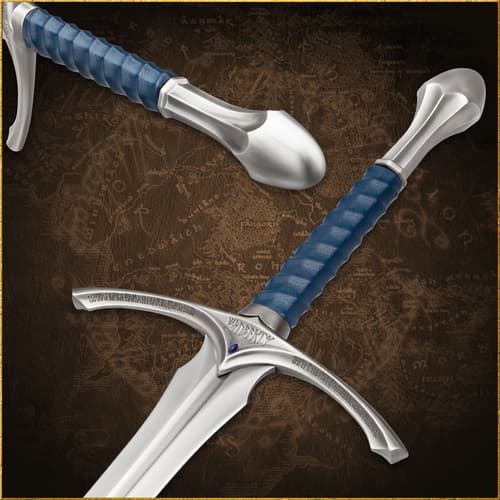
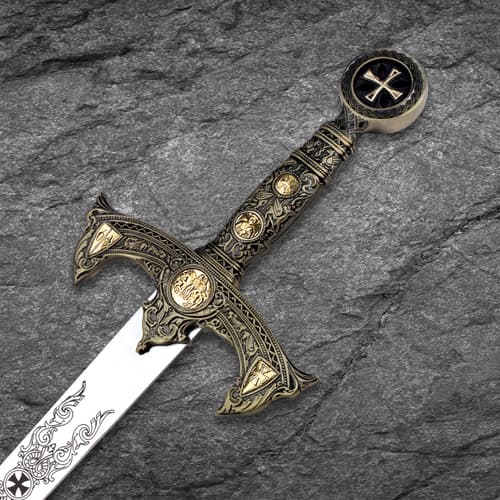
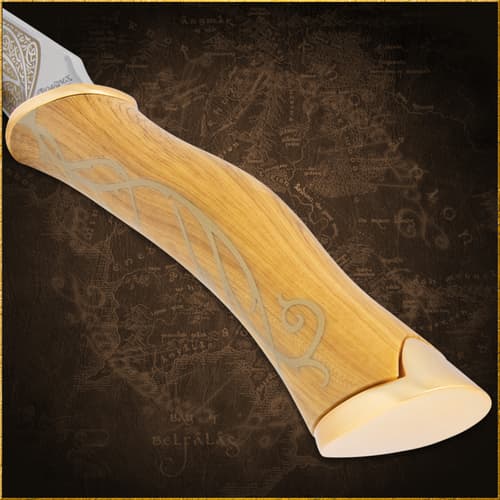
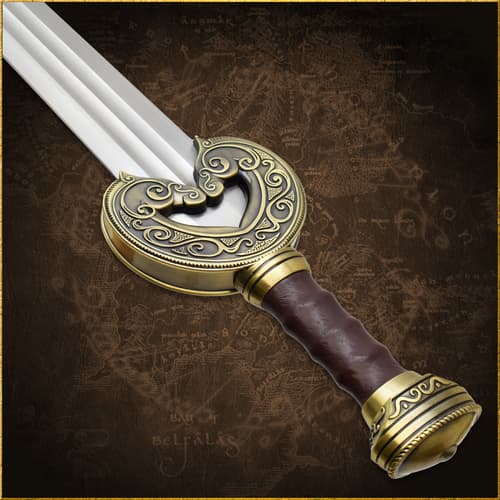
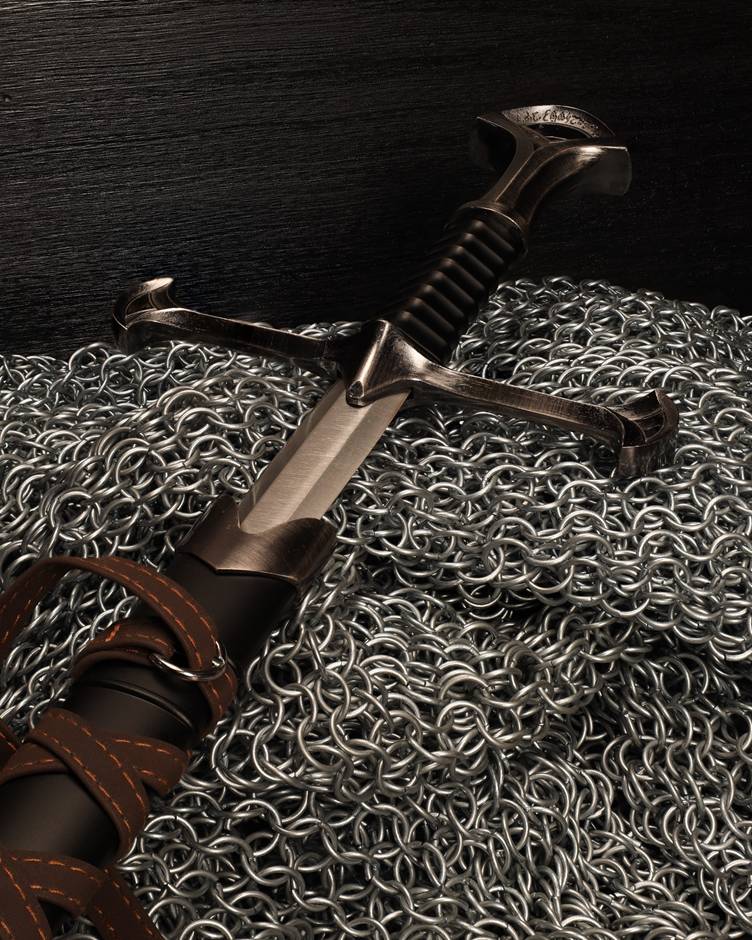
- Hilt: The “handle” of a sword.
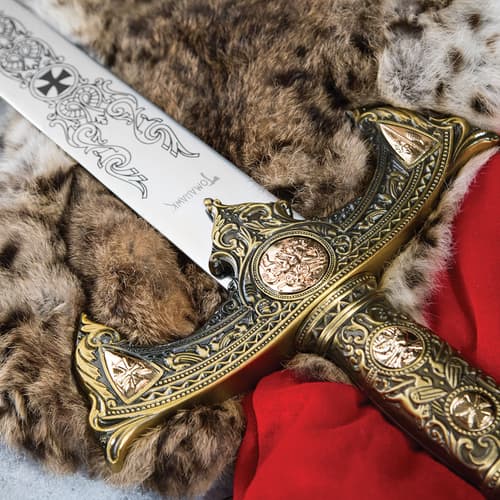
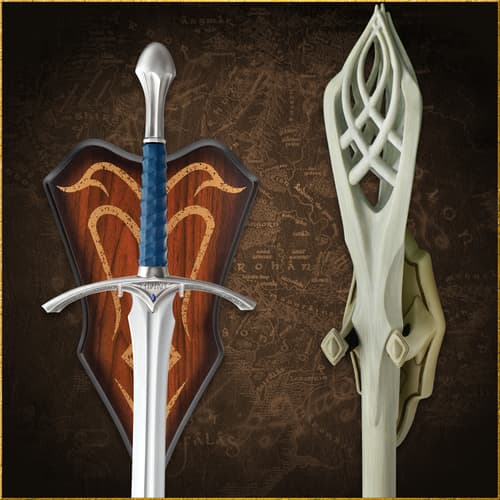
- Guard: A loose term that describes any portion of the hilt that protects the hands. A guard may also be called a quillion.
- Crossguard: A type of guard that transverses the hilt perpendicularly.
- Basket hilt: A type of hilt in which the hand is fully enclosed.
- Pommel: The base of the hilt, often in the shape or form of a ring, ball, or lozenge.
- Weak: The portion of the blade that comprises approximately 50% of the blade, from the tip toward the middle. It is with this portion of the blade that most attacks are made. Also called the blade foible.
- Strong: The half of the blade that extends from the hilt to approximately 50% of the length toward the tip. It is with this portion of the blade that most defensive maneuvers, such as parries, are executed. Also called the blade forte.
Swordplay Terminology
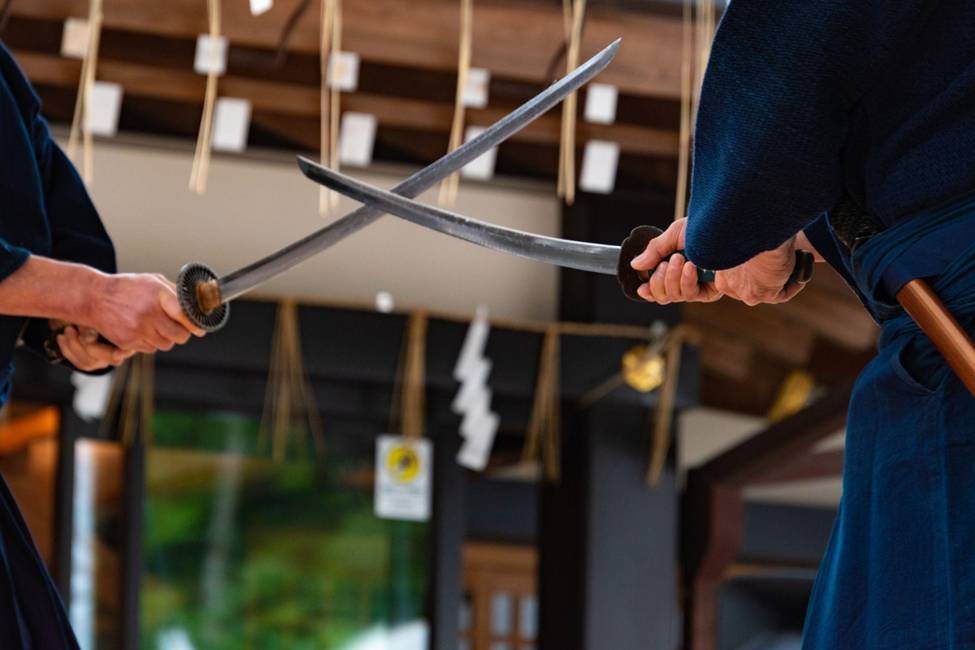
There are also a number of terms used in swordplay that are used to describe guards, stances, positions, or maneuvers. Here are some of the more common among them:
- Advance: A short forward movement, executed to close space between a wielder and his opponent, and potentially before a thrust or lunge.
- Fade: The act of leaping backwards and landing with the feet in the same position.
- Empty fade: Executing a fade, but then immediately leaping forwards into the same position.
- Guard: A stance or position, adopted to give the wielder an advantage prior to either an offensive maneuver, or as a defensive stance, taken in anticipation of an offensive maneuver on behalf of the opponent.
- Pass forward: Taking a step forward with your rear foot, moving it into the front position.
- Pass back: Taking a step back with the front foot, moving it backwards into the rear position.
- Retreat: A quick movement backwards.
- Parry: A defensive maneuver in which an opponent’s blade is blocked or pushed aside, thwarting an attack. Parrying can be performed with a blade, with a sidearm such as a dagger, or with a buckler. Historically parrying may have also been referred to as “turning.”
- Thrust: An offensive maneuver in which the wielder strikes at the opponent with the tip of the sword.
- Lunge: A thrusting maneuver in which the wielder steps forward with the upper body, directing the point of his sword at his opponent. A more powerful thrust.
- Cut or slash: An offensive maneuver in which the edge of the sword is used to deliver an attack.
- Feint: A “fake” attack that is used to elicit a response from the opponent, presenting an opportunity for a real attack.
Differences Between Western and Traditional Japanese Swords
This post focuses mostly on the terms associated with Western swords. While the fundamental construction of traditional Japanese swords, like realistic katana and wakizashi swords, are effectively the same as their Western counterparts, different words are used to which adherents of Japanese martial arts are faithful. For more information on the parts of a Japanese sword, see our previous post which explores the topic more thoroughly.
Explore a Wide Selection of Realistic Katanas and Modern Swords and Weapons Here
This post is not a comprehensive review of the terminology associated with swords, sword construction, or swordplay, but it is a good place to start. If you’re here for a realistic katana or some other battle ready sword, take a look through our collection and get in touch with us if you have any questions.