Wooden Handle Katanas and Some Insight into Traditional Japanese Sword Maintenance
Wooden Handle Katanas and Some Insight into Traditional Japanese Sword Maintenance
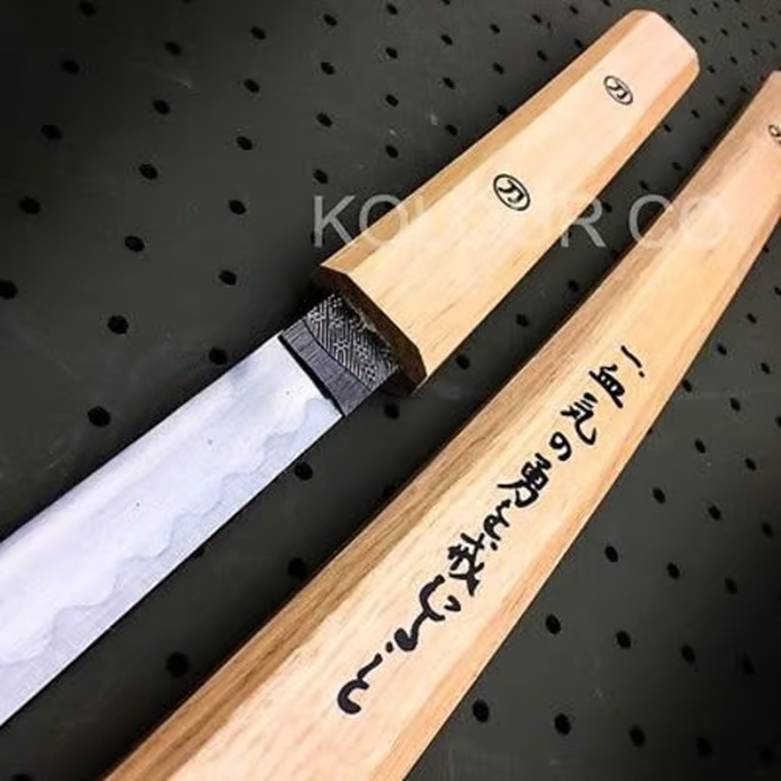
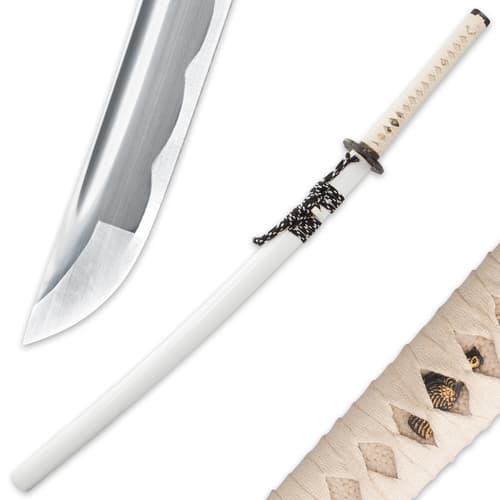
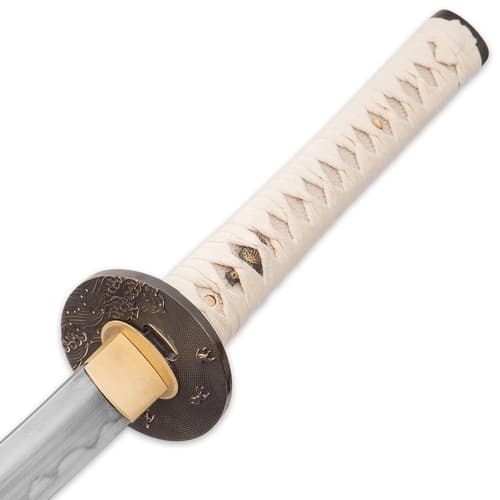
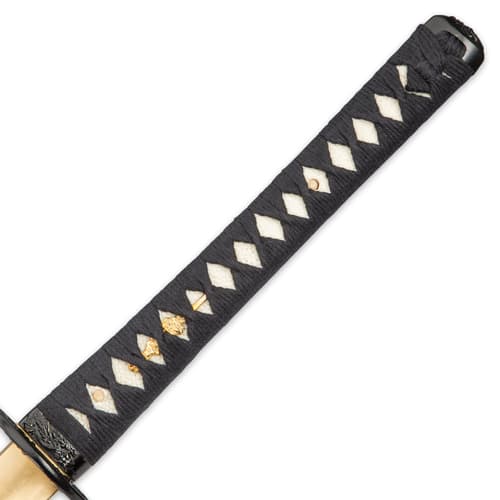
Have you ever seen a wooden handle katana before? Some are made with beautiful woods like rosewood, and typically the sheath (saya) and hilt (tsuka) are matching. But did you ever notice that the tsuka was entirely unornamented, which is highly atypical for a Japanese sword, and that moreover there was no tsuba? This is because these are not Japanese swords in the sense that they are used for fighting. These wooden handled katana swords are known as shirasaya, and the outfitting is for very different purposes.
What Is a Wooden Handle Katana, or Shirasaya
Shirasaya means “white sheath” in Japanese, and is a reference to the fact that traditionally the shirasaya was made with untreated magnolia wood, which is very light in color and almost looks white. It is not a sword because it is not intended for fighting; rather, these wooden handle katanas, or more properly, shirasaya, were intended for storage, transportation or safe keeping. A katana when assembled with its tsuka and in its lacquered saya can and will rust if not properly cared for. Over time, it will likely rust even if it is properly cared for. The Japanese started removing their swords from their tsuka and storing them with a plain wooden hilt and sheath to protect them from moisture.
This is because the untreated wood from which a shirasaya is made is highly breathable and does not trap moisture. Therefore, storing or transporting a katana in a shirasaya is a hedge against corrosion and it is safer to manage the blade in this fashion. In the modern era, shirasaya may be made from other types of wood and are revered for their simple beauty. However, the shirasaya also brings up the question of other aspects of routine Japanese sword maintenance. In addition to long-term storage in a shirasaya, there are other things you can do to protect your traditional Japanese swords.
What Comes with a Traditional Japanese Sword Cleaning Kit?
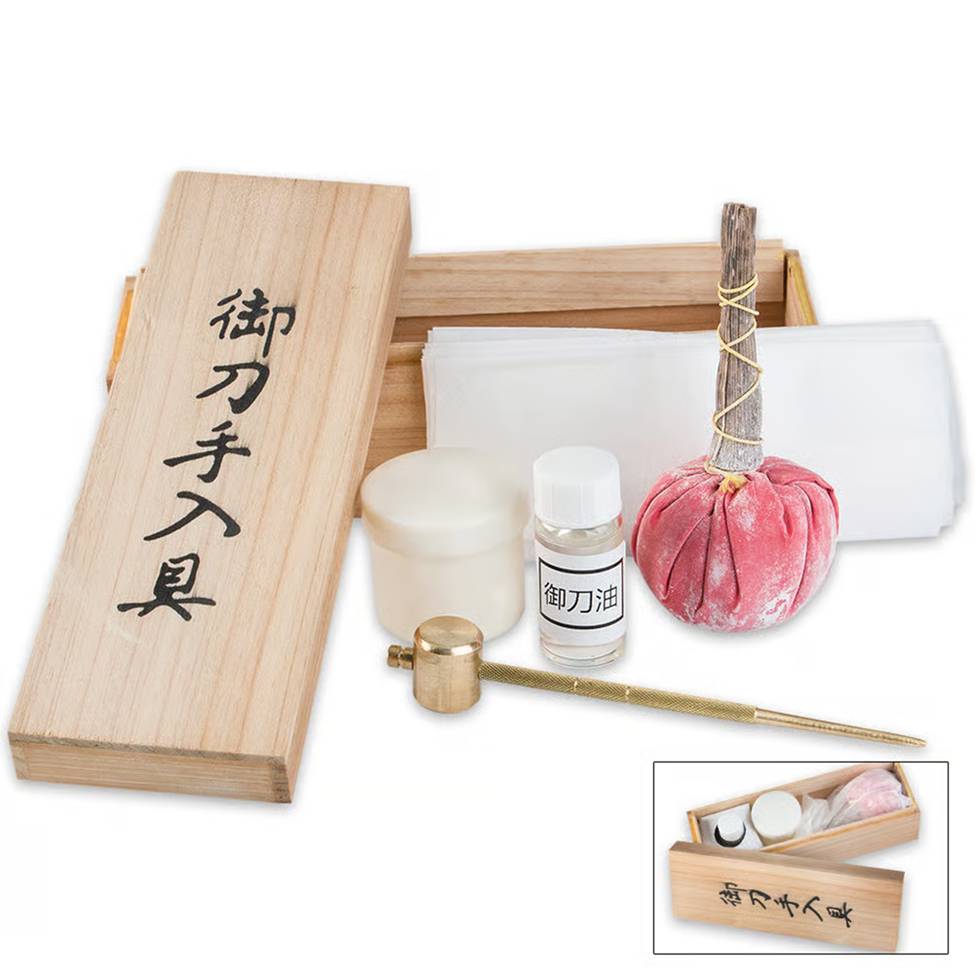
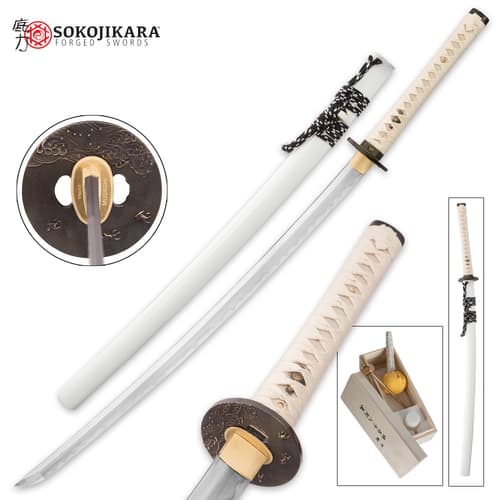
Typically, there are 4 main components to a Japanese sword cleaning kit. These are a cloth, or sheets or rice paper, a small brass hammer known as a mekugi-nuki, a small round cloth ball on a handle known as an uchiko ball, and a little bit of choji oil. The first step of cleaning a real samurai sword is to disassemble it using the mekugi-nuki. This brass hammer is used to remove the small bamboo begs, or mekugi, that secure the tang in place in the tsuka. It is made of brass so as not to damage anything, as brass is a soft and nonreactive metal alloy. Once the mekugi have been removed and the blade removed from the tsuka, the blade can be wiped down using the cloth or rice paper. Take care only to wipe from the spine so as to avoid the edge of the sword.
Once the sword’s blade and tang have been wiped clean, strike the uchiko ball against both flat sides of the blade. The uchiko ball is full of a special powder that was once made from powdered polishing stone and wrapped in silk, though in modern Japanese sword cleaning kits it may be full of baby powder. This uchiko powder helps absorb excess oil that will be used and will also polish the blade when the excess is wiped away. Once you have powdered both sides of the blade, apply a few drops of choji oil, then using the included rice paper or cloth, wipe away the excess. Only a thin layer of choji oil, which is a mixture of mineral oil and clove oil, is necessary to protect the blade against corrosion.
How to Store Your Wooden Handle Katana (or Any Real Sword)
While you don’t necessarily need to store your Japanese swords in a shirasaya, you should observe the previous considerations for sword cleaning and maintenance, as well as some general notes for proper sword storage. Whether or not you store your sword in a shirasaya, you should always clean the blade after use, and clean and oil it before you store it. This thin layer of oil will help protect the blade against oxidation. Secondly, make sure to store your sword in a cool and dry location. This is most critical. Regardless of what kind of sword you own, it should be protected against chronic high humidity as well as against shifts in atmospheric moisture. Adhering to these recommendations will help protect your sword against rust and other corrosion.
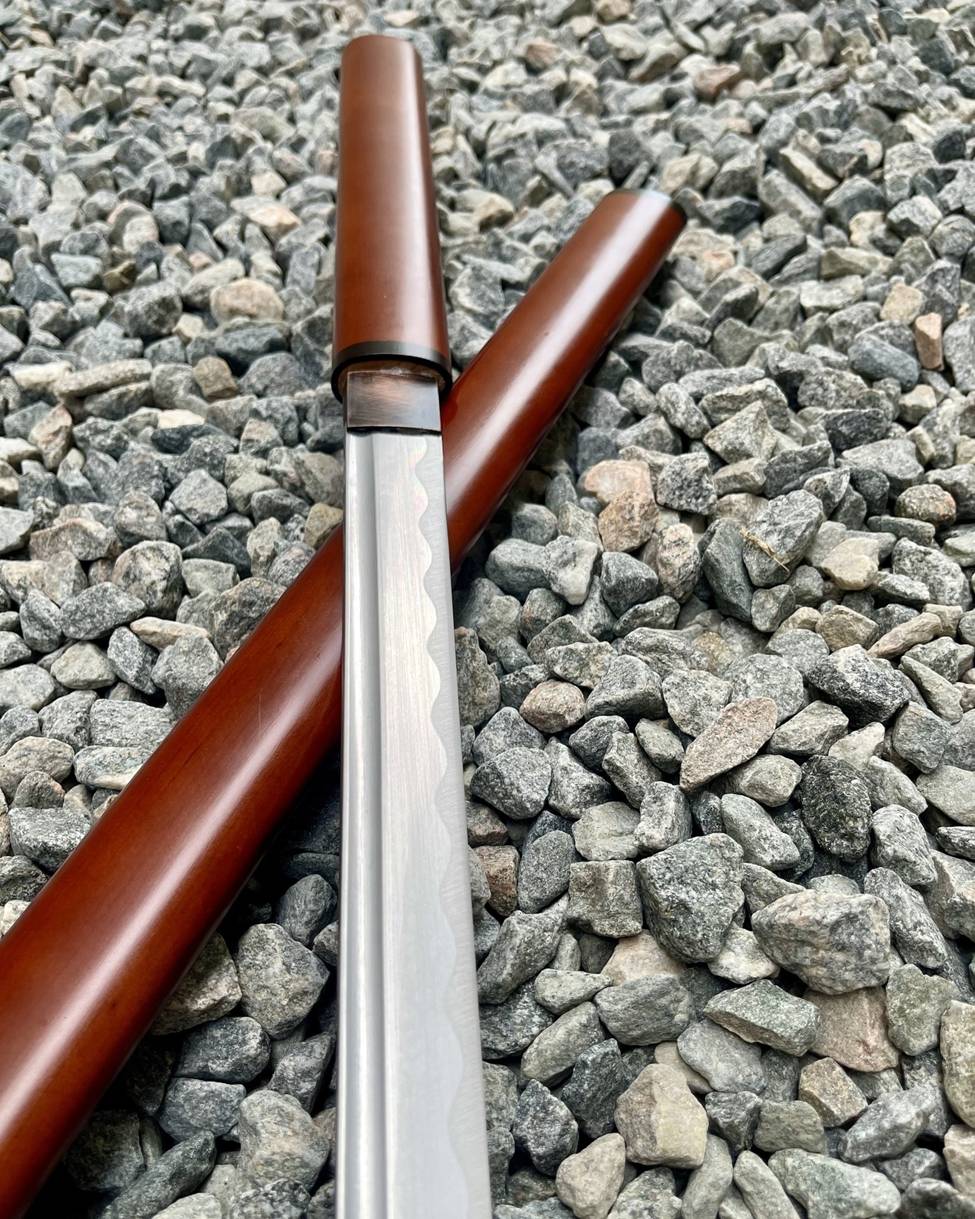
Explore Shirasayas and Other Real Samurai Swords Here
Whether you’re in the market for a wooden handle katana for a display, some other type of traditional Japanese sword, or you’re in need of a sword cleaning kit, take a close look through our catalog and get in touch with us if you have any questions.