A Basic Guide to Crusader Swords
A Basic Guide to Crusader Swords
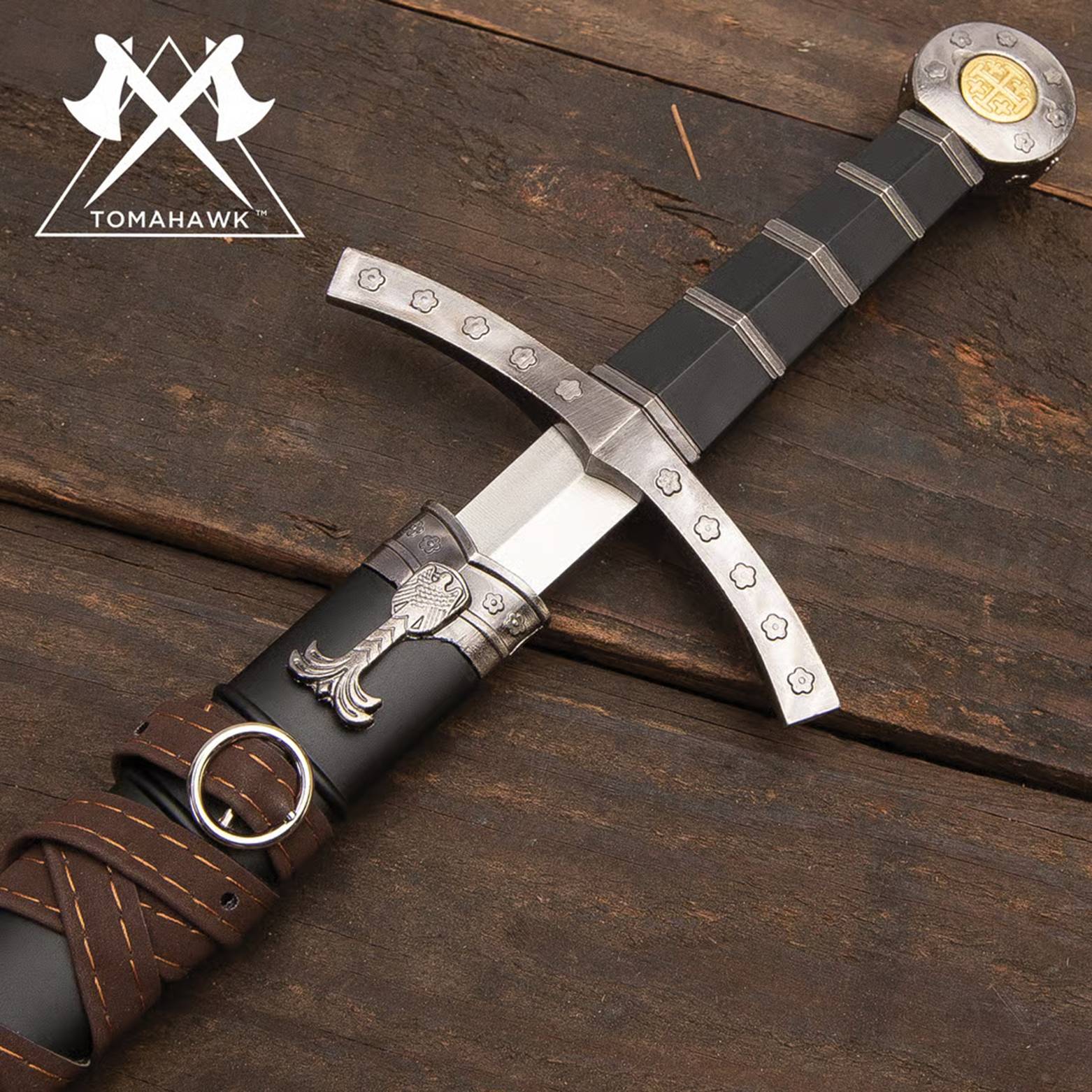
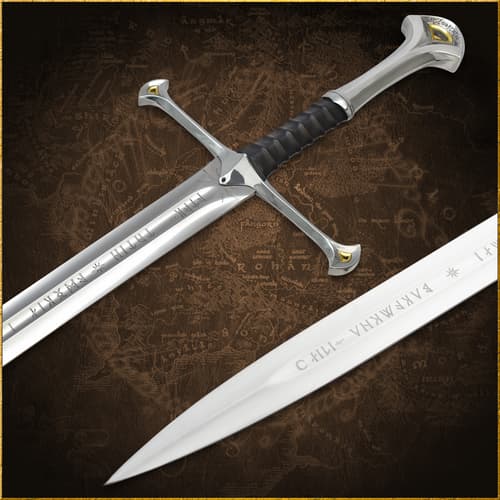
Crusader swords constitute a class of swords that are basically cruciform, or cross-shaped, in profile. If you’re familiar with Oakeshott typology, Crusader swords generally are recognizable according to Oakeshott type X, XI, and XII patterns. But what are the features of a Crusader sword, and what else should you know? This short post should help with that.
What Is a Crusader Sword?
Patterns commonly called Crusader swords are known by a number of their features, some of the most recognizable of which are listed here:
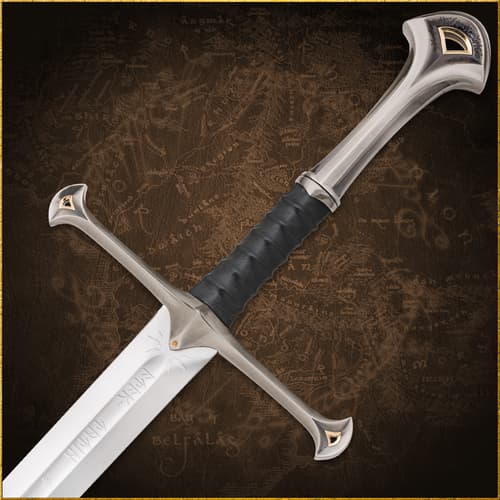
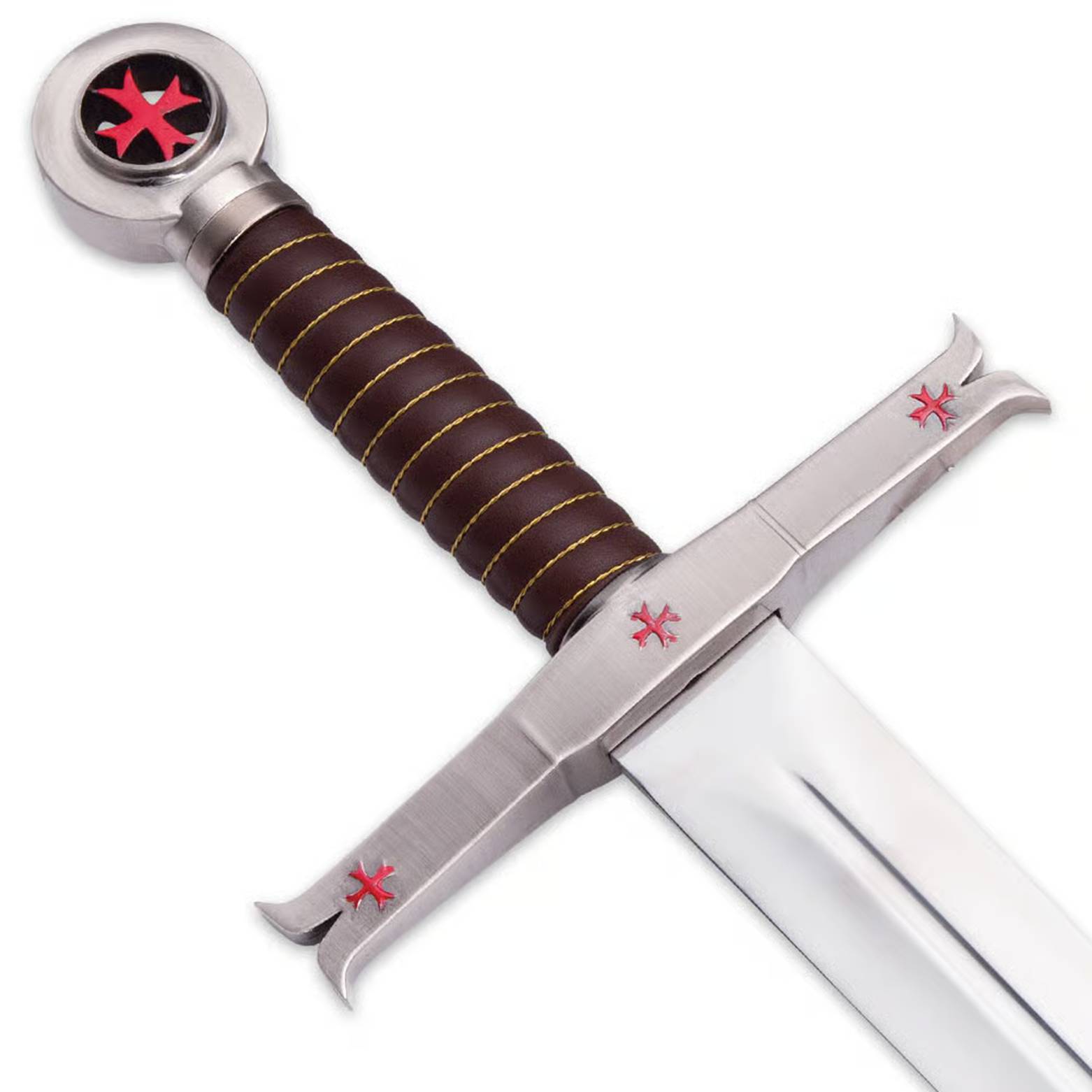
- Cruciform hilt: This is the definitive feature of a Crusader sword, and consists of a crossguard set at right angles (perpendicular) to the blade. This gives the sword the profile of a cross, which was fitting considering the objective of the Crusaders. The cruciform hilt, however, was more than just symbolic and offered a great deal of protection to the wielder’s hands. While a Crusader sword could potentially lack some of the other features mentioned here, if it doesn’t have a cruciform hilt it could hardly be called a Crusader sword.
- Single-handed grip: Most Crusader swords were relatively small and light, roughly 30 to 35 inches in length, and with a shorter hilt that was intended to accommodate a single-handed grip. This gave the warrior the ability to wield a shield of some sort in the other hand.
- A round, heavy pommel. The pommel doesn’t just serve as the anchor point for the tang of the sword. In the case of a cruciform sword like a Crusader sword, the pommel also served as a counterweight, enabling the sword to be more deftly handled with a one-handed grip.
- A fuller: Crusader swords, like many similar western sword patterns, sport a wide fuller in the middle of the blade. Sometimes erroneously referred to as a “blood groove”, the main purpose of a blade’s fuller was to add structural rigidity to the blade while at the same time lightening it by removing some metal stock.
- A double-edged blade. Crusader swords, like many other hand and hand-and-a-half patterns, were typified by a blade that had two edges, unlike other patterns like falchions and grosse messer swords that had only a single edge.
All in all, if you’re looking at a sword pattern that’s designed to be wielded with one hand and which has a cruciform hilt, you’re looking at a pattern that might rightly be called a Crusader sword.
Can a Crusader Sword Be Used for Live Cutting Practice?
That depends entirely on if the sword pattern in question is battle ready, by which is meant that it:
- Is made from an appropriate steel alloy.
- Is properly heat-treated and tempered so as to resist damage.
- And has a full tang.
If the sword in question has these three attributes it might be considered battle-ready. If so, it can be used for live cutting practice, but only suitable targets such as the following should be used:
- Fruits and vegetables.
- Filled water bottles or milk jugs
- Paper or cardboard targets.
- Rolled mats.
Beyond these, be careful when cutting with your Crusader sword as you will want to avoid contact with hard targets like wood, stone, or target frames or stands.
How Do I Care for a Crusader Sword?
Care of a Crusader sword is not much different from care of any other sword or knife made with a non-stainless alloy. Here are some high level notes.
- Do not touch the blade, as oils and salts in your skin can etch the blade or cause corrosion.
- Do not store the blade in its scabbard or expose it to chronic high humidity.
- Periodically oil both sides of the blade or treat it with microcrystalline wax.
If you use your Crusader sword for live cutting practice, here are some other special notes:
- Always wipe down the blade thoroughly after use. Leaving juices, such as from fruits or vegetables, will damage the blade.
- Never stick the point of the blade in the ground as you will damage the edge and could even snap off the tip.
- Do not strike hard objects with the blade of your sword.
- Always ensure that the blade is completely dry before you store the sword.
How Should I Display My Crusader Sword?
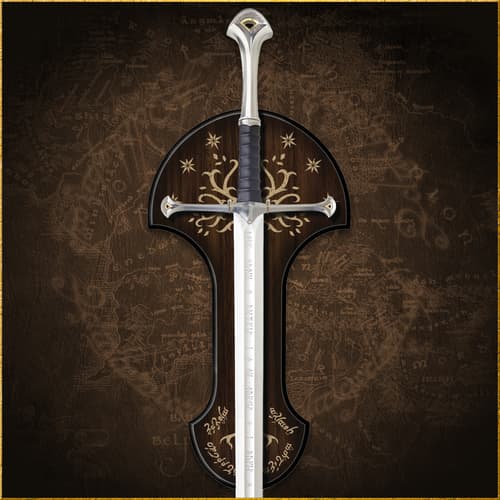
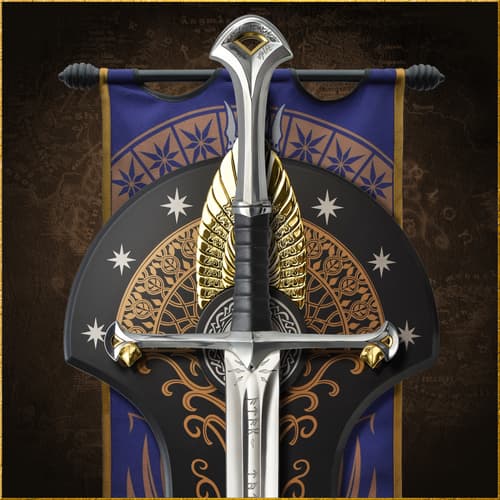
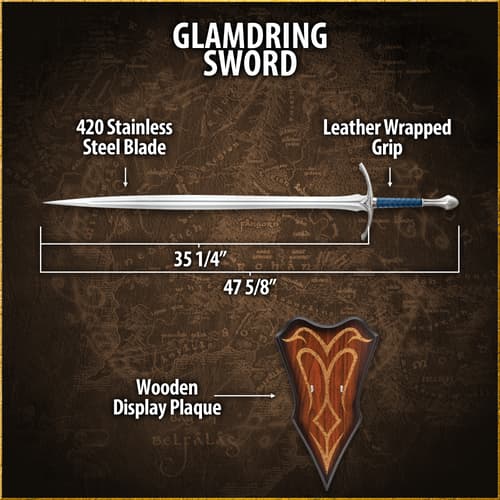
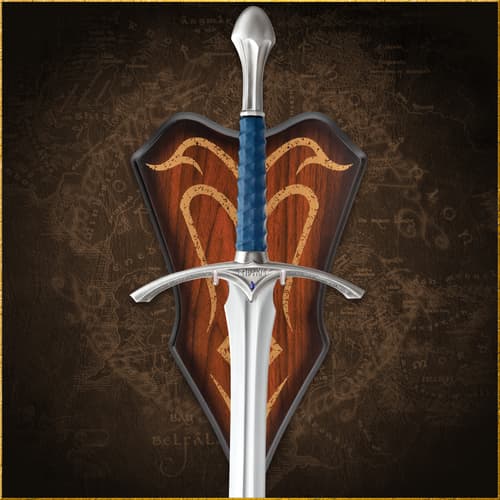
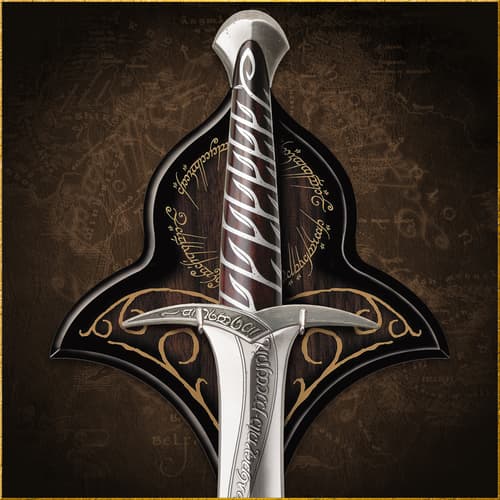
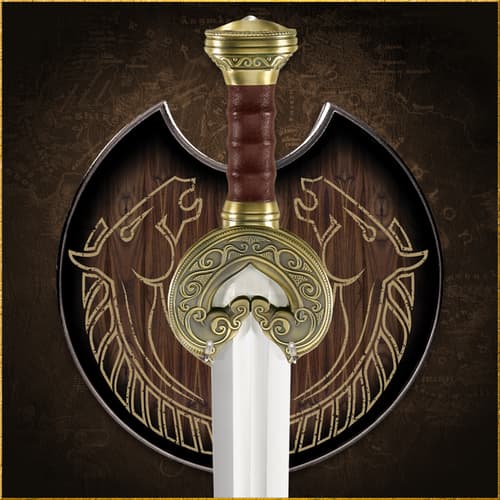
While there are many ways to display a Crusader sword, one of the best ways is supported by the crossguard, with the point downwards. There are plaques you can buy for this purpose that have brass or wooden hooks, but you can also improvise your own with wooden pegs. Displaying a Crusader sword in this manner will keep the blade out of its scabbard, helping to protect it against rust and corrosion, and will properly support the sword. It is also one of the best ways to make a pleasant aesthetic impression with a cruciform sword.
Some places where you can display a cruciform sword to best effect include but are not limited to:
- Living areas like parlors, family rooms and living rooms.
- Offices and libraries.
- Hallways and other passageways.
- Bedrooms.
Pretty much the only places in a home where it would be inadvisable to display a sword are bathrooms, laundry rooms and kitchens. Not only do these rooms not really get the proper congregation necessary to warrant a display, but they are often hot and humid, which is not beneficial to a sword’s blade.
Here for a Crusader Sword?
Thinking about adding a Crusader sword to your collection? Take a look through the different patterns we carry here and if you have any questions get in touch with us directly and we will be more than happy to help you pick one that’s good for your intended applications.